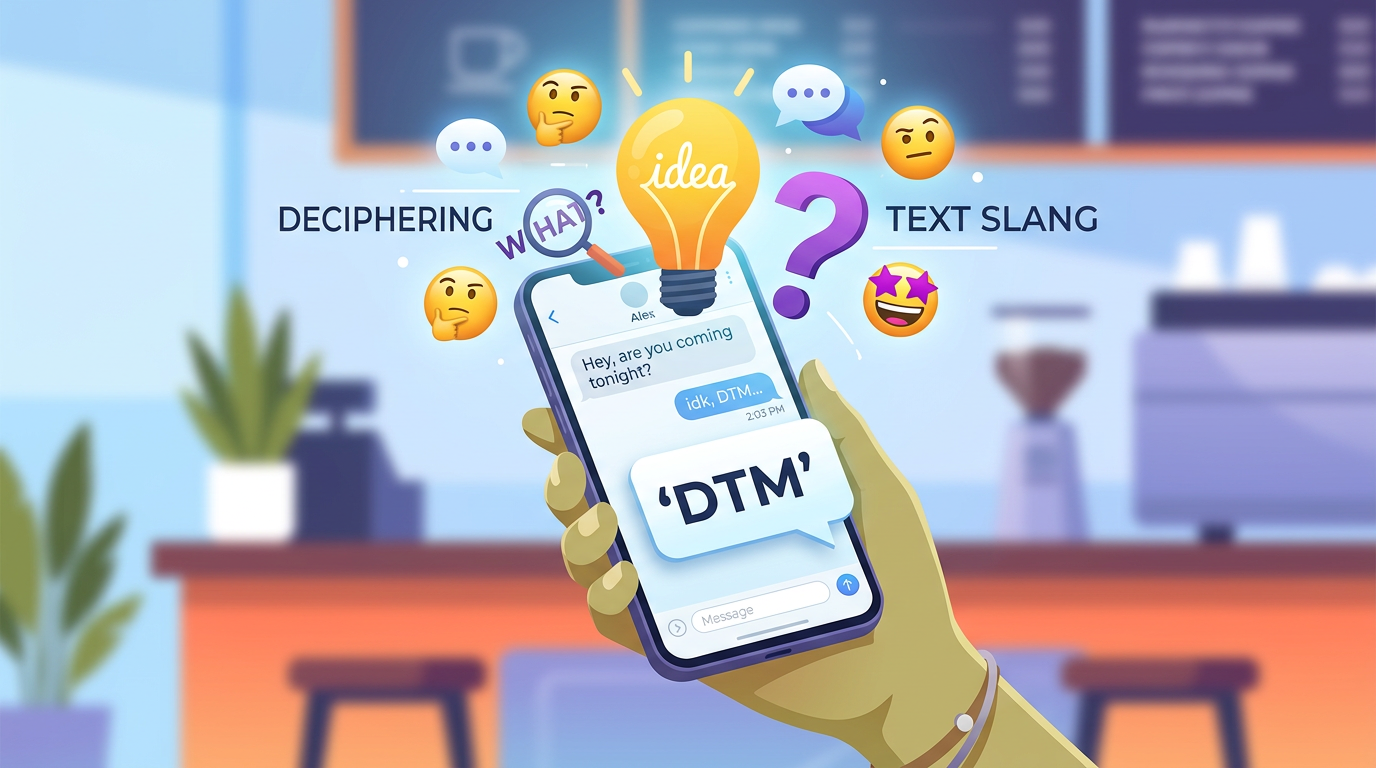
DTM meaning in text refers to a texting acronym that stands for one of four common phrases: “down to meet,” “dead to me,” “doing too much,” or “don’t text me.” The correct definition depends entirely on the context surrounding the message.
Three letters, four completely different emotional outcomes. One version invites you somewhere. Another shuts the door for good. That kind of range is rare for a single acronym, and it’s exactly why so many people freeze up the moment DTM lands in their inbox.
This guide breaks down every meaning behind DTM, shows how platform and tone change the interpretation, and walks through real conversation examples so you’ll never send the wrong reply again.
Quick Answer Box
If you’re in a hurry, here’s your instant answer.
DTM most commonly stands for “Down to Meet,” used when someone’s confirming they’re free or interested in meeting up. But it has three other common meanings, and mixing them up can genuinely change the tone of a conversation.
| Meaning | Common Use Case | Tone |
|---|---|---|
| Down to Meet | Making plans, dating apps, casual hangouts | Positive, easygoing |
| Dead to Me | Ending a friendship or relationship | Negative, final |
| Doing Too Much | Calling out overreacting or dramatic behavior | Sarcastic, blunt |
| Don’t Text Me | Cutting off communication after a conflict | Cold, direct |
In a hurry? If the conversation feels friendly and casual, DTM almost always means “down to meet.” If it follows an argument or tense exchange, it’s more likely “dead to me” or “don’t text me.”
What Does DTM Mean in Text?
So, what does DTM mean, exactly? It’s a texting acronym with four widely recognized definitions, and none of them are interchangeable. Getting the wrong one can turn a simple invite into an awkward misfire, or worse, make you miss that someone’s genuinely upset with you.
Let’s break each one down.
Down to Meet
This is the version you’ll bump into most often, especially on dating apps and among younger texters. Down to Meet signals openness or agreement to meet up in person. Think of it as a shorthand cousin of “I’m free” or “let’s do it.”
Example:
“Wanna grab coffee Saturday?” “DTM, what time works?”
Here, DTM functions almost like a confirmation stamp. It’s casual, upbeat, and doesn’t carry any hidden edge. You’ll see it a lot in the context of a casual meetup, whether that’s grabbing food, going to a party, or just linking up with friends.
Dead to Me
On the flip side, Dead to Me is about as blunt as texting gets. It signals that the relationship, whether romantic, platonic, or familial, has hit a cut off point. There’s no ambiguity in the emotion behind it, even if the reason isn’t spelled out.
Example:
“I can’t believe you told everyone about that.” “You’re DTM after this.”
This use of DTM usually shows up after betrayal, a lie, or some kind of falling out. It’s dramatic by design. People don’t say “dead to me” over small stuff, so if you see it, take it seriously. It often signals friendship ended territory or a relationship over moment.
It’s worth noting that “dead to me” doesn’t always mean permanent. Sometimes it gets said in the heat of the moment, and things quietly patch up once emotions cool down. Other times, it really is the final word. The difference usually comes down to history: has this person said it before and come back around, or is this genuinely out of character for them? Pattern matters just as much as the phrase itself.
Doing Too Much
Sometimes DTM isn’t about ending things at all. It’s a callout. Doing Too Much gets used when someone thinks another person is overreacting, being extra, or putting in more effort (or drama) than a situation calls for.
Example:
“I texted him 12 times because he didn’t reply in 10 minutes.” “Girl, DTM.”
This meaning leans conversational and often lands with a mix of humor and honesty. It’s less about anger and more about excessive actions or dramatic behavior that a friend feels needs a reality check.
You’ll notice this version of DTM shows up constantly in group chats when someone’s recapping drama. It’s the digital equivalent of a friend raising an eyebrow at you. It can be gentle teasing (“DTM, chill out”) or a sharper callout when someone’s genuinely crossed a line (“not you DTM-ing this whole situation for no reason”). Either way, it functions as social feedback, a quick way of saying “maybe pump the brakes” without writing a whole paragraph about it.
Don’t Text Me
Finally, Don’t Text Me is the most direct request of the bunch. Unlike “dead to me,” which is emotional and somewhat vague, “don’t text me” is a clear boundary. It says: stop messaging, full stop.
Example:
“Can we talk about what happened?” “DTM. I need space.”
This version often follows an argument and functions as a no contact request. It’s less about permanent rejection and more about needing distance, at least for now.
The important thing here is respecting the boundary as stated. Unlike “dead to me,” which is emotional and open to interpretation, “don’t text me” is about as clear as a text can get. Responding to it with more messages, even well-meaning ones, tends to make things worse rather than better. If someone sends this, the best response is usually silence, followed by patience. They’ll reach back out when they’re ready, and if they don’t, that’s information too.
DTM Outside of Texting
Before going further, it’s worth clearing up something that trips a lot of people up. Not every “DTM” search is about texting at all.
DTM is also the official abbreviation for the Deutsche Tourenwagen Masters, a German touring car racing championship that’s been around since the 1980s (with a modern relaunch in 2000). If you searched “DTM meaning” and landed here expecting motorsport content, that’s what you’re thinking of — it’s a completely separate use of the acronym.
In business and workplace shorthand, DTM sometimes stands for “determine,” particularly in internal notes, project trackers, or meeting shorthand. It’s far less common than the texting meanings but does pop up occasionally in professional settings.
So if the context around “DTM” involves cars, racing, or corporate jargon rather than a group chat, you’re probably looking at one of these other definitions, not the texting slang covered in this guide.
Where DTM Comes From
Texting acronyms rarely have one clean origin story, and DTM is no exception. Like most modern slang, it grew out of the need to type fast, especially in early SMS days when character limits and slow keyboards made abbreviations genuinely useful rather than just trendy.
“Down to meet” likely evolved from the broader “DTF” family of acronyms (more on that comparison later), adapted into something less explicit and more socially acceptable for everyday plans. Meanwhile, “dead to me” as a phrase has existed in spoken English for decades, long before texting; shortening it to DTM was a natural next step once acronym culture took hold on platforms like AIM, MSN Messenger, and later, smartphones.
What’s interesting is the split in tone. Some acronyms evolve organically through everyday use (like “dead to me” simply getting clipped down), while others are adopted deliberately because they let people stay vague on purpose. DTM checks both boxes, which is part of why it’s stuck around. It’s flexible enough to serve totally different emotional registers depending on who’s using it and why.
Search interest in DTM meaning has climbed steadily alongside the rise of TikTok slang explainers, Genius.com-style acronym breakdowns, and Gen Z’s general fondness for compressing entire sentences into three or four letters.
Acronym culture in texting didn’t happen by accident. Early mobile keyboards were slow, character limits on SMS were real, and typing out a full sentence took actual effort compared to today’s swipe keyboards and voice-to-text. Shortcuts like LOL, BRB, and TTYL became second nature, and DTM slotted into that same lineage once “down to meet” needed a faster way to get typed out during fast-moving group chats about weekend plans.
What makes DTM a little different from older acronyms like LOL or BRB is that it never settled on one single meaning the way those did. Most texting shorthand converges toward a single, widely agreed-upon definition over time. DTM stayed split, likely because “dead to me” and “doing too much” were already common spoken phrases before texting ever shortened them, and both phrases happened to abbreviate to the exact same three letters as “down to meet.” That overlap is really an accident of language, not a deliberate design, but it’s exactly why the acronym causes so much confusion today.
How to Tell Which Meaning Someone Means
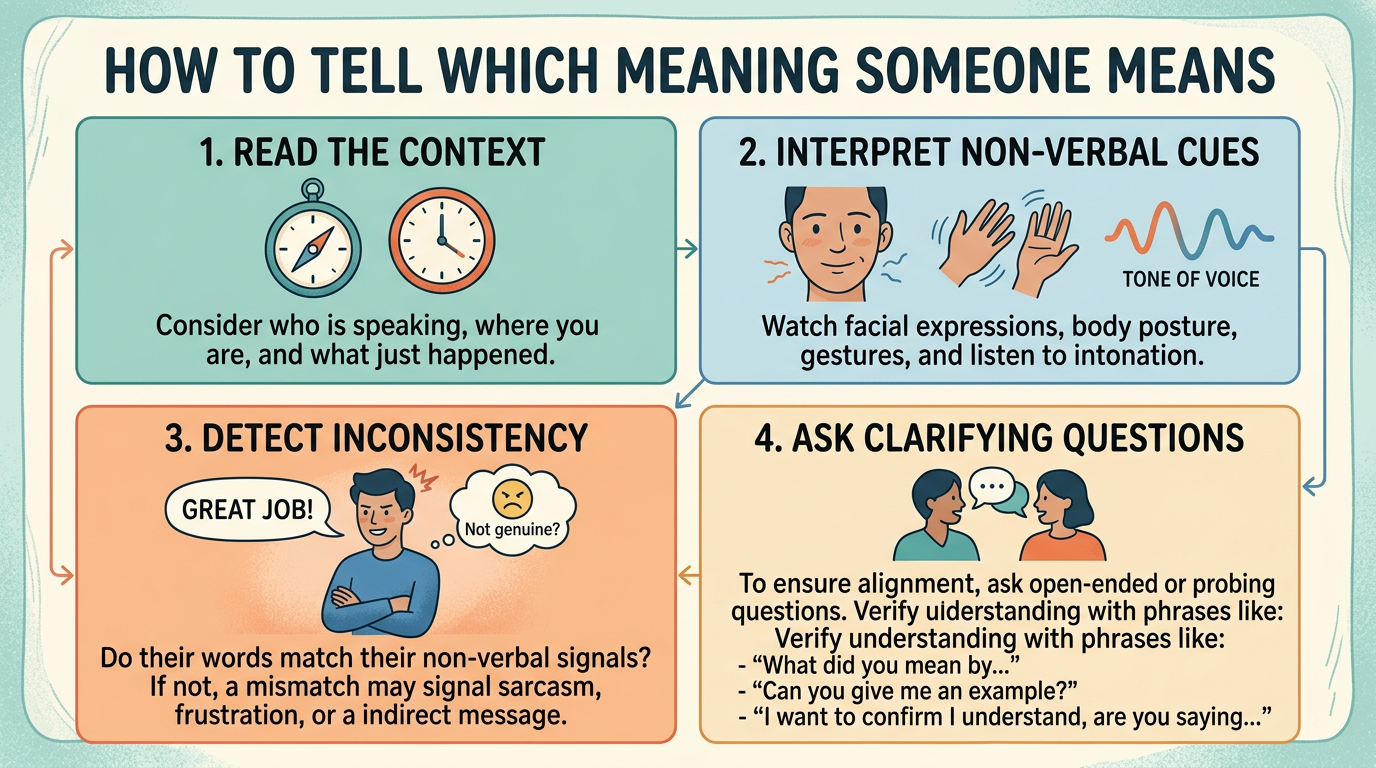
Here’s the tricky part: DTM doesn’t come labeled. You have to read the room, and honestly, that’s true of most texting acronym slang. Context does the heavy lifting.
The Role of Punctuation and Tone
Punctuation carries more emotional weight in texting than people give it credit for. A casual “dtm!” with a lowercase letter and an exclamation point reads completely differently than a flat “DTM.” with a period and nothing else.
- Exclamation points and emojis almost always point toward “down to meet.”
- A blunt period, no emoji, no follow-up often signals “dead to me” or “don’t text me.”
- All caps with sarcasm markers (like “lol DTM”) usually means “doing too much.”
What Came Before and After the Text
Nothing decodes DTM faster than the message right before it. If the conversation was about weekend plans, restaurants, or hanging out, DTM is almost certainly “down to meet.” If it followed an accusation, an apology, or a “we need to talk,” it’s leaning toward the more serious meanings.
Who Sent It
The sender matters as much as the message itself. A text from a close friend after a lighthearted exchange reads differently than the same three letters from someone you just matched with on a dating app, or someone you had a falling out with last week. Relationship history shapes interpretation more than the acronym itself ever could.
DTM Meaning by Platform
Slang doesn’t behave the same way everywhere. The platform someone’s texting on shapes how casual, formal, or loaded a term like DTM feels, so let’s go app by app.
Snapchat and iMessage/Texting
On Snapchat and standard texting, DTM leans heavily toward “down to meet.” These platforms are built around real-time, personal conversations, so the tone tends to stay lighter and plans-focused. Snapchat slang in general favors quick, low-effort acronyms, and DTM fits right in.
TikTok and Instagram Comments
In comment sections, DTM shows up a bit differently. On TikTok slang threads, it’s often used more playfully, sometimes as a reaction to a video (calling out someone “doing too much” on camera) rather than a direct message between two people. Similarly, on Instagram comments, you’ll see DTM used as public commentary, poking fun at dramatic behavior in a post or clip.
On Dating Apps
Here’s where “down to meet” dominates almost entirely. On dating apps like Tinder, Hinge, and Bumble, DTM functions as a quick signal of interest in meeting in person, often after a few days of messaging. It’s a low-pressure way to move a conversation from the app to real life without sounding overly formal or intense.
Discord and Group Chats
In Discord chat communities and group texts, DTM tends to pull double duty. It might mean “down to meet” when someone’s organizing a hangout or gaming session, or it might mean “doing too much” when someone’s teasing a friend for overreacting mid-conversation. Group context (who else is in the chat, the general vibe of the server) plays a bigger role here than on one-on-one platforms.
Twitter/X
On Twitter/X, DTM shows up least often of all these platforms, but when it does, it usually leans toward the callout meaning (“doing too much”), often aimed at public figures, viral posts, or ongoing discourse rather than personal plans.
Why Platform Shapes the Meaning So Much
The reason DTM shifts by platform comes down to audience and purpose. Private messaging apps like iMessage and Snapchat are built for one-to-one, real-time conversation, so the acronyms that thrive there tend to be logistics-focused: plans, meetups, quick confirmations. Public platforms like TikTok and Twitter/X, on the other hand, are built for commentary and reaction, so the slang that survives there leans toward judgment and humor rather than scheduling.
Dating apps sit somewhere in between. They’re technically private, one-on-one spaces, but the entire point of the platform is meeting people in real life, so “down to meet” naturally became the dominant interpretation there. Discord is the wildcard of the bunch, since it blends private DMs with public server channels, which is exactly why both meanings (“down to meet” for hangouts, “doing too much” for callouts) show up depending on which part of the platform you’re in.
Quick platform cheat sheet:
| Platform | Most Likely Meaning |
|---|---|
| Snapchat / iMessage | Down to Meet |
| TikTok / Instagram Comments | Doing Too Much |
| Dating Apps | Down to Meet |
| Discord / Group Chats | Down to Meet or Doing Too Much |
| Twitter/X | Doing Too Much |
The pattern here isn’t random. Private, one-on-one platforms trend toward plans-making, while public, comment-based platforms trend toward commentary and callouts. Keep that distinction in mind and you’ll rarely misread a DTM again.
Real Conversation Examples
Reading definitions only gets you so far. Seeing DTM in actual text examples makes the difference between the four meanings a lot clearer.
Example 1 — Down to Meet
“Party’s at my place Friday, you coming?” “DTM 100%, what time”
Example 2 — Dead to Me
“I heard what you said about me behind my back.” “We’re done. DTM.”
Example 3 — Doing Too Much
“I left him on read for an hour so now I’m ignoring his story too.” “lol DTM, just talk to him”
Example 4 — Don’t Text Me
“I really think we should talk this through.” “DTM for now, I need time.”
Example 5 — Down to Meet, dating app context
“This might be forward but you seem cool, wanna grab drinks this week?” “haha not forward at all, dtm! Thursday work?”
Example 6 — Doing Too Much, group chat context
“I made him a 20 minute playlist explaining my feelings” “bestie DTM 😭 just call him”
Notice how tone markers, like lowercase letters, laughing emojis, or exclamation points, shift the reading even before you get to the words themselves. A flat, capitalized “DTM.” with no punctuation almost always signals something more serious than a lowercase “dtm!” tucked into a casual reply.
Side-by-Side Comparison — Same Letters, Opposite Vibes
Look at these two back-to-back:
“Hey, you around this weekend? DTM if you’re free!”
versus
“After what you did, DTM.”
Same three letters. Completely different emotional temperature. The first is an invitation. The second is a wall going up. That gap is exactly why context, tone, and platform matter more than the acronym itself.
When to Use DTM (and When to Skip It)
DTM works great in some situations and lands terribly in others. Here’s a quick gut-check.
Good times to use DTM:
- Casual texting with friends about plans
- Dating app conversations once things feel comfortable
- Group chats where the tone is already relaxed
- Quick, low-stakes replies to hangout invites
Times to skip DTM:
- Work or professional messaging (it reads unprofessional and unclear)
- Texting someone significantly older who may not know the slang
- Early-stage conversations with someone new, where clarity matters more than brevity
- Serious emotional conversations where the acronym could come across as dismissive instead of direct
If there’s any real chance of confusion, and given how many meanings DTM carries, that chance is higher than most acronyms, it’s usually safer to just spell out what you mean.
How to Respond to a DTM Text
Not sure how to reply? Here’s a breakdown by meaning.
If it means “Down to Meet”:
“Perfect, let’s lock in a time!” “Awesome, where should we meet up?”
If it means “Dead to Me”:
“I understand you’re upset, can we talk when you’re ready?” “That’s fair, I’m sorry for what happened.”
If it means “Doing Too Much”:
“Ha, yeah maybe I should chill lol” “Fair point, I’ll dial it back”
If it means “Don’t Text Me”:
“Okay, I’ll give you space.” “Understood, reach out whenever you’re ready.”
If you genuinely don’t know which one they mean, the smartest move is to ask directly rather than guess. Something simple like “wait, what do you mean by that?” avoids the risk of responding with excitement to what was actually a breakup text, or responding coldly to what was just a casual invite.
DTM vs. Similar Slang
DTM isn’t the only acronym that causes acronym confusion. Here’s how it stacks up against a few lookalikes.
| Acronym | Meaning | How It Differs from DTM |
|---|---|---|
| DTF | Down to F***, sexual interest | More explicit, less about general plans |
| DTR | Define the Relationship | Focused specifically on relationship status talks |
| IDC | I Don’t Care | Emotional detachment, not about meeting or cutting off contact |
| TTYL | Talk to You Later | Neutral sign-off, no emotional weight |
| LMK | Let Me Know | Neutral, used to request a response |
The biggest mix-up tends to happen between DTM and DTF, since both start the same way and both can show up in dating contexts. The key difference: DTM (“down to meet”) is about meeting up in a general sense, while DTF carries an explicitly sexual connotation. Confusing the two in a real conversation can lead to a genuinely awkward misread, so it’s worth keeping straight.
Common Mix-Ups and Misreads
Because DTM carries four legitimate meanings, misunderstandings happen more often than you’d expect. Here’s a realistic scenario that shows how quickly things can go sideways.
Scenario: Two friends, Maya and Jordan, had a disagreement over the weekend. A few days later, Jordan texts: “Hey, you around?” Maya, still annoyed, replies: “DTM.” Jordan reads it as “down to meet” and shows up at Maya’s place that evening, expecting to hang out. Maya, who actually meant “don’t text me,” is confused and a little frustrated that her boundary wasn’t respected, except Jordan genuinely never understood the boundary in the first place.
This mix-up wasn’t about bad intentions on either side. It was about assuming DTM only meant one thing, without checking the emotional context of the conversation leading up to it. The lesson here: when the meaning isn’t obvious, don’t guess. Ask.
This kind of slang confusion is exactly why acronyms with multiple meanings can cause more harm than the extra few seconds it takes to type out a full sentence. When emotional stakes are high, clarity beats brevity every time.
A second scenario worth knowing about: on a dating app, one user texted “you free this weekend? DTM if so.” The other person, unfamiliar with the acronym, assumed DTM was some kind of inside joke or typo and simply didn’t respond, worried about looking clueless by asking. The conversation fizzled out entirely, not because of disinterest, but because of a three-letter mystery that neither side bothered to clarify. It’s a small example, but it shows how acronym confusion doesn’t just cause emotional misreads. Sometimes it just kills a conversation through pure hesitation.
The fix in both scenarios is the same: when a text feels ambiguous, a quick clarifying question costs almost nothing and saves a lot of guesswork. “Wait, what do you mean by DTM?” is a completely normal thing to ask, and nobody’s going to think less of you for it.
Who Actually Uses DTM
DTM skews younger, primarily Gen Z and younger Millennials, and shows up most on mobile-first, casual platforms rather than email or formal messaging. Teen and young adult texting habits have consistently shown a strong preference for abbreviated, acronym-heavy communication, largely driven by the speed of mobile typing and the cultural influence of platforms like TikTok and Snapchat.
Millennials tend to use DTM primarily in the “down to meet” sense, often in group chat planning. Gen Z uses it more flexibly across all four meanings, including the callout (“doing too much”) usage, which has grown alongside the broader trend of using slang for humor and social commentary rather than just logistics.
Older generations are far less likely to use or recognize DTM at all, which is exactly why context and audience awareness matter so much when deciding whether to use it in a message.
Geography and social circle play a role too. Slang doesn’t spread evenly. It clusters around specific friend groups, schools, and online communities before going mainstream, if it ever does. That’s part of why some people have never heard of “doing too much” as a DTM meaning, while others use it constantly without ever encountering “down to meet.” If you’re unsure how familiar someone is with the term, it doesn’t hurt to spell it out the first time you use it with them, then let the acronym take over naturally afterward.
Variations and Related Acronyms
A few spinoffs and related terms show up alongside DTM in casual conversation:
- DTMWY — “Down to Meet Whenever You” — a slightly more flexible version of DTM, signaling openness to any timing
- DTM² — occasionally used for emphasis, essentially “really down to meet”
- Platform-specific variants — some Discord servers or niche online communities develop their own inside-joke spins on DTM, though these rarely spread beyond that specific group
These variations aren’t nearly as common as the core four meanings, but they’re worth knowing if you come across them in a group chat and want to avoid a second round of confusion.
FAQs
Is “Doing Too Much” the most common DTM meaning right now?
Yes, in 2026 slang trackers, “doing too much” edges out “down to meet” as the most searched and most-used meaning, especially on TikTok and Instagram.
Does DTM ever appear outside of slang or texting?
Yes — in the garment and fashion industry, DTM stands for “Dyed to Match,” referring to matching fabric or trim colors, completely unrelated to texting.
Is “dead to me” still a common DTM meaning in 2026?
Not really. Most current slang guides note it’s a rarer, more dramatic use compared to “doing too much” or “down to meet.”
What’s the safest way to interpret DTM if I’m unsure?
Check the tone and platform first — playful and public (TikTok/Instagram) usually means “doing too much,” while private and plans-related usually means “down to meet.”
Is DTM considered rude slang?
Not inherently. Most 2026 sources describe it as neutral to playful, with tone and context (not the acronym itself) determining whether it reads as friendly or cutting.
Conclusion
DTM meaning in text really comes down to one thing: context. The same three letters can invite you somewhere, call you out, or shut a conversation down completely. Once you know the four meanings, spotting the right one gets easy.
Next time DTM meaning in text pops up in your messages, don’t panic. Look at the tone, the platform, and who sent it. If you’re still stuck, just ask. A quick question beats a wrong guess every time, and now you’ve got everything you need to reply with confidence.