SS in text typically stands for “screenshot,” the most common meaning across texting, gaming chat, and social media. On Snapchat specifically, it usually means “Snapstreak,” while in casual conversation it can also shorthand “same” or “so sorry.” The exact meaning shifts depending entirely on the platform and the sentence around it.
Here’s the fun part: two letters, six different meanings, and one wrong guess that can turn a simple text into total confusion. That’s exactly why this tiny abbreviation deserves more attention than it usually gets.
This guide breaks down every real meaning of SS, platform by platform, with quick context clues, real examples, and a cheat sheet you can reference anytime a bare “ss” leaves you second-guessing what someone actually meant.
SS Meaning in Text — Quick Answer
In most conversations, SS stands for “screenshot.” That’s the single most common meaning of SS across texting, Discord, gaming chat, and social media in 2026. On Snapchat specifically, SS almost always means “Snapstreak.” Less commonly, people use it to mean “same” (casual agreement), “so sorry” (a quick apology), or, in product listings, “stainless steel.”
That’s the short version. Now let’s get into the details, because context is everything with this one.
Where “SS” Came From
Two-letter acronyms didn’t start with smartphones. Long before texting existed, instant messengers like AIM and MSN Messenger trained a whole generation to compress phrases into the smallest possible number of keystrokes. Typing on a flip phone’s number pad — where hitting the “7” key four times just to get an “s” — made brevity a survival skill, not a style choice.
SS slotted neatly into that tradition. It’s short, it’s fast to type with one thumb, and it maps onto several everyday phrases that all happen to start with the letter S: screenshot, same, sorry, streak. That overlap is exactly why the abbreviation is so flexible — and also why it trips people up.
By the time smartphones with actual keyboards took over, the habit had already stuck. Texting culture rewards speed over spelling things out, and once an abbreviation catches on inside a platform’s community, it tends to stay there even after the original reason for saving keystrokes (limited character counts, painful number-pad typing) disappeared.
There’s also a social layer to it that’s easy to miss. Shorthand isn’t just about saving time — it’s a small signal that you belong to a particular group. Teenagers on Snapchat use “ss” one way, gamers on Discord use it another way, and someone selling kitchenware online uses it in a totally different sense entirely. Each community picked up the acronym independently and shaped it around whatever made sense for how they communicate. That’s actually pretty normal for internet slang in general — think about how “lol” started as genuine laughter and slowly drifted into something people type even when they’re not laughing at all. Abbreviations mutate. They pick up new jobs as the communities using them change.
It also helps to remember that online commu nication rewards low-friction typing more than almost any other form of writing humans have ever done. A handwritten letter has time built into it. A text message doesn’t. When you’re mid-conversation, typing on a touchscreen, trying to keep up with a fast-moving group chat, every saved keystroke adds up. That pressure is exactly what turned dozens of everyday phrases into two- and three-letter codes, and SS is one of the more successful examples because it maps onto so many common phrases at once.
The 6 Real Meanings of SS, Ranked by Frequency
Not all meanings are created equal. Some show up constantly; others you’ll see maybe once a year. Here’s how they actually rank based on real-world usage across texting and social platforms.
Screenshot — the Dominant Meaning
This is it. This is the one you’ll run into most. Screenshot meaning is by far the most common use of SS in modern digital communication, especially anywhere group conversations, gaming, or “proof” culture shows up.
- “Send ss of the error message” = send a screenshot
- “Got the ss, one sec” = I took the screenshot
- “Ss or it didn’t happen” = a playful way of demanding proof
Screenshot abbreviation usage exploded alongside “receipts” culture — the internet habit of demanding visual proof before believing a claim in an argument, a group chat drama, or a customer service dispute. When someone says “send ss,” they’re asking for a screen capture, plain and simple.
This meaning has become so dominant that in a lot of communities, “ss” doesn’t even register as an abbreviation anymore — it functions almost like its own word. Customer support threads use it. Group chats use it to settle arguments. Online marketplaces use it to confirm a deal actually happened the way someone claims it did. If a message got deleted, if someone’s denying they said something, if a group chat needs proof before it believes a wild claim — “send ss” is the fastest way to ask for that proof.
There’s a reason this particular meaning won out over the others in most spaces: screenshots themselves became a kind of social currency. Before screen recording and screenshotting were built into every phone by default, people had to describe what they saw secondhand, and secondhand accounts get twisted easily. Once screenshotting became instant and universal, “just send the ss” turned into the fastest way to end a disagreement before it went any further. That single use case is probably the biggest reason the screenshot meaning now edges out every other definition of SS combined.
Snapstreak — Snapchat-Specific
On Snapchat, SS takes on an entirely different job. Snapstreak meaning refers to the running count of consecutive days two users have sent each other snaps. Miss a day, and the streak resets to zero — which, if you talk to any teenager, is treated as a minor tragedy.
- “We’re at 200 ss!” = 200-day Snapstreak
- “Don’t let our ss die” = keep the streak going
This is a Snapchat-specific meaning almost exclusively. Outside the app, “ss” referring to a streak barely ever comes up, which is exactly why context — specifically, which app you’re in — matters so much here.
Snapchat’s streak feature works by tracking consecutive days where both people in a conversation send each other at least one snap — a photo or video sent through the app, as opposed to a regular text message. Miss a full day without sending anything, and the count resets back to zero, no exceptions, no grace period. That “use it or lose it” design is exactly why streaks became such a big deal socially, especially among younger users. A high Snapchat streak number becomes a kind of badge — proof of a long-running, consistent friendship or relationship, at least in the eyes of the app.
Because losing a streak feels like losing progress, an entire secondary vocabulary grew up around protecting them. You’ll hear people talk about “streak recovery,” send a friend a mid-morning snap “just to keep the ss alive,” or ask someone to “hold my ss” while they’re on a flight or somewhere without service. None of that has anything to do with screenshots — it’s entirely wrapped up in the Snapchat abbreviation for streaks, and it’s a great example of how a single acronym can mean something totally different depending purely on which app the conversation is happening in.
Same — Casual Agreement
Sometimes SS is just shorthand for “same,” used as a quick way to say “I agree” or “that’s me too.” It’s a relatable response, the texting equivalent of nodding along.
- Person A: “I haven’t done laundry in two weeks”
- Person B: “ss”
This use is more casual and a bit less universal than the screenshot meaning, but it shows up constantly in casual texting among younger users, particularly in reply-style messages where a full sentence would feel like overkill.
So Sorry — the Apology Shorthand
SS occasionally stands in for “so sorry,” functioning as a fast apology abbreviation when someone wants to acknowledge a mistake without typing the whole phrase.
- “ss, forgot to text back”
- “ss for the late reply”
Think of this as sorry shorthand for low-stakes situations — running late, a slow reply, a small mix-up. It’s not the kind of apology you’d lean on for anything serious (more on that in the mistakes section below).
Stainless Steel — the Overlooked Meaning
Step outside social messaging and into shopping, and SS takes on a completely different, very literal meaning: stainless steel. You’ll spot it constantly in product titles and descriptions — “SS water bottle,” “SS cookware set,” “304 SS fittings.”
This meaning rarely shows up in personal texting, but it’s genuinely common enough in e-commerce and product listings that leaving it out of a full guide would be an oversight.
Super Sexy / Straight Savage — the Rare Slang Use
Least common, but still out there: some people use SS as flirtatious slang for “super sexy,” or occasionally as a stylized way of saying “straight savage” in more niche slang circles. You’ll see this far less often than the meanings above, and it depends heavily on the specific group or community using it.
Here’s the full ranking at a glance:
| Rank | Meaning | Typical Platform |
|---|---|---|
| 1 | Screenshot | Everywhere — texting, Discord, gaming, social media |
| 2 | Snapstreak | Snapchat |
| 3 | Same | Instagram, TikTok, general texting |
| 4 | So sorry | General texting |
| 5 | Stainless steel | Shopping/product listings |
| 6 | Super sexy / straight savage | Niche slang, flirtatious texting |
How to Decode SS From Context (A Simple Method)
You don’t need to memorize a chart every time someone sends you “ss.” Run through this quick three-question test instead:
- Which platform is this on? Snapchat almost always means Snapstreak. Everywhere else, screenshot is the safer first guess.
- Where does it sit in the sentence? “Send ss” or “got ss” points to screenshot. A standalone “ss” as a reply to a statement usually means “same.” An “ss” opening a message often means “so sorry.”
- What was the conversation about right before it? If someone just described a bug, an argument, or a funny post, they probably want a screenshot. If someone just shared a relatable complaint, “ss” is almost certainly agreement.
If you run through those three questions and you’re still unsure, it’s completely fine to just ask. A quick “ss = screenshot or same? lol” clears things up faster than guessing wrong and responding to the wrong thing entirely.
SS Meaning by Platform
Different apps have developed their own dominant use of SS, almost like regional dialects. Here’s how it breaks down.
Snapchat — Snapstreak
SS on Snapchat is essentially a reserved term. The platform’s entire streak feature has built its own vocabulary around it — “streaks,” “snapstreak,” and simply “ss” all point to the same thing: a running count of daily snaps exchanged between two users. Snapchat slang treats this meaning as close to universal; you’ll rarely see “ss” mean anything else inside the app.
Discord and Gaming Chat — Screenshot, Almost Exclusively
Discord and gaming chat are where the screenshot meaning dominates completely. Whether it’s a bug report, a funny in-game moment, or proof of a trade, “ss” in these spaces means one thing.
- “Can you ss that error for the mods?”
- “Ss the scoreboard, that was insane”
Gamer slang leans heavily on efficiency, and typing “ss” instead of “screenshot” fits right into a culture built around fast typing during active gameplay or voice comms.
Twitter/X and Reddit — Screenshot
Same story on Twitter/X and Reddit. When someone asks for an “ss” of a deleted tweet, a suspicious DM, or a wild comment thread, they mean screenshot, full stop. This is closely tied to receipts culture — screenshotting has become the internet’s default method of preserving evidence before something gets deleted.
Instagram and TikTok Comments — Same or Screenshot
Comment sections are a bit more mixed. On Instagram and TikTok, “ss” as a reply to a relatable post usually means “same,” while “ss” in a request context (“can someone ss this before it gets taken down”) still means screenshot. Read the sentence structure, not just the letters.
WhatsApp and iMessage — Rarely Used, Usually Screenshot
Here’s a fair question worth answering directly: does SS mean anything different in WhatsApp versus iMessage? Not really. On both WhatsApp and iMessage, the abbreviation shows up far less often than on Snapchat or gaming platforms, and when it does appear, it’s overwhelmingly used to mean screenshot.
- “Ss that receipt for me?”
- “Send an ss of the confirmation email”
There’s no meaningful iMessage slang distinction here, and WhatsApp doesn’t attach any special meaning to SS the way Snapchat does with streaks. If anything, its rarity on these two apps is itself a clue — since mobile messaging on WhatsApp and iMessage tends to skew slightly more toward full words than Snapchat or Discord’s fast-paced style.
Part of that comes down to who’s using each app and for what. WhatsApp skews heavily toward international users, families, and work groups in a lot of regions, which naturally pushes conversations toward clearer, more universally understood phrasing. iMessage, similarly, gets used across a wider age range than something like Snapchat, which is heavily concentrated among teens and young adults. When your audience spans grandparents and coworkers alongside close friends, shorthand tends to get dropped in favor of full words — not because the platform enforces it, but because the people using it naturally adjust their language to their audience.
A real-world mix-up worth learning from: picture a small friend group’s chat where one person, fresh off a week of heavy Discord gaming sessions, texts the group “ss the group photo before Sarah deletes it.” Half the group reads it instantly as “screenshot.” One person, though, spends most of their day on Snapchat and briefly assumes it has something to do with a streak, pausing to ask “wait, what streak?” before someone clarifies. It’s a small, harmless mix-up, but it’s a good illustration of exactly why platform habits shape how quickly — or slowly — people decode the same two letters.
SS in Gaming and Voice Comms
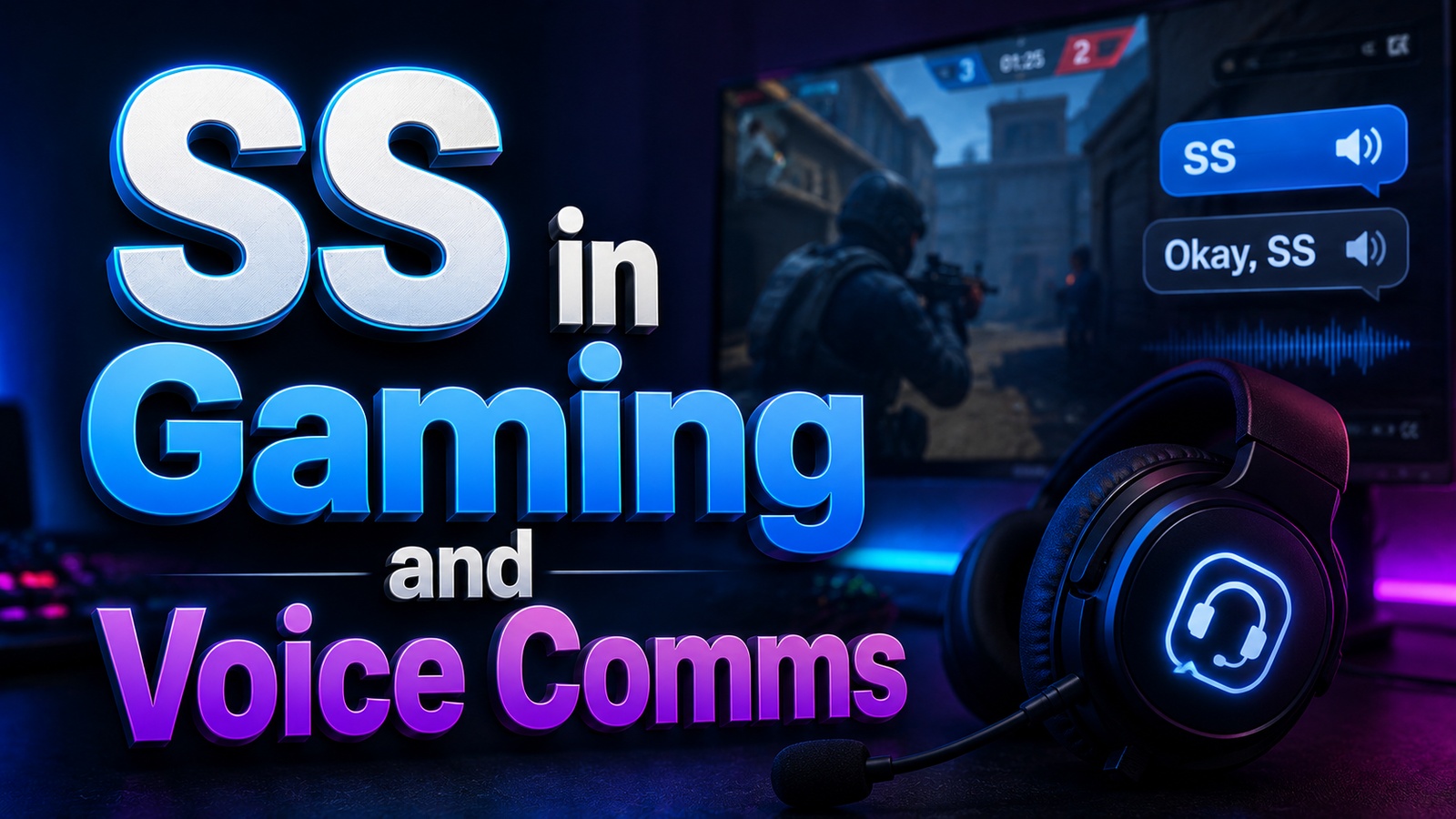
SS in gaming deserves its own section because the use case is so specific and so common. Competitive games generate constant moments worth capturing — clutch plays, funny glitches, questionable referee calls in sports games, rare item drops. Screenshot proof has become the default currency of gaming communities.
Where It Shows Up Most
- Bug reports: “Ss this glitch and send it to support”
- Bragging rights: “Ss that killcam right now”
- Trade/marketplace disputes: “Get an ss of the trade before you confirm”
- In-match call-outs during voice comms: Players will sometimes say “screenshot that” out loud mid-game, which then gets typed as “ss” in the post-match chat log
Gaming communication moves fast, and gaming abbreviations like SS exist specifically to keep pace with that speed. You’ll find this same shorthand across gamer abbreviations in Discord servers, in-game chat boxes, and clip-sharing communities like those built around Twitch and YouTube gaming clips.
There’s also a competitive-integrity angle that pushes screenshot culture hard in gaming specifically. Ranked matches, tournament brackets, and item trades in games with in-game economies all rely on players being able to prove what happened. Without a built-in referee watching every match, the community essentially polices itself using screenshots as evidence — a scoreboard, a suspicious kill count, a trade confirmation, a rank-up notification. “Ss it or it didn’t happen” isn’t just a joke in gaming spaces; it’s practically an unwritten rule.
Voice comms complicate this slightly, since a lot of gaming communication happens out loud rather than typed. Players will often say “screenshot that” or even just “ss that” verbally mid-match, and it only shows up in writing afterward — in a Discord server’s text channel, a match recap, or a clip title. That back-and-forth between spoken and typed shorthand is part of why gaming communities end up with such a dense, fast-evolving vocabulary compared to more text-only spaces.
How to Use SS in a Sentence
Seeing the meanings in isolation is one thing — seeing them in real sentences makes the pattern click a lot faster. Here are examples across every major use:
Screenshot examples:
- “Ss this before they delete the post.”
- “I’ll ss the receipt and send it over.”
- “Can you send an ss of that group chat message?”
Snapstreak examples:
- “We just hit 365 ss, unreal.”
- “My phone died and I lost our ss.”
Same/agreement examples:
- “I’m exhausted today.” / “ss honestly.”
- “This coffee is way too expensive.” / “ss, I just paid $7 for a latte.”
So sorry examples:
- “ss I totally spaced on your message.”
- “ss, running 10 minutes late!”
Stainless steel examples (product listings):
- “304 SS water bottle, 32oz.”
- “SS cookware set, dishwasher safe.”
When NOT to Use SS
Knowing the meanings is half the battle. Knowing when to avoid the abbreviation entirely is just as important, especially if you want to come across as clear rather than confusing.
Professional or Business Settings
This is the big one. Professional or business settings call for actual words, not texting shorthand. Sending a coworker “ss” in a Slack message might get you a confused reply instead of the screenshot you needed.
“I got a message from a new hire that just said ‘ss the report’ and genuinely thought it was a typo,” one office manager mentioned in a discussion about workplace messaging habits. “I had no idea what she meant until she followed up with ‘screenshot.'”
Business communication generally rewards clarity over speed. If you’re emailing a client, messaging your manager, or writing in a formal office chat, spell it out: “screenshot,” “same,” or “sorry” instead of the acronym. Formal language and professional texting just don’t mix well with two-letter shorthand, no matter how second-nature it feels in your group chats.
The risk isn’t just that someone might not understand you — it’s that even when they do figure it out, shorthand like this can read as overly casual for the setting. A manager reviewing a report doesn’t need “ss,” they need “screenshot,” and using the full word signals that you’re taking the exchange seriously. This matters even more in written records that might get referenced later, like project documentation, client emails, or anything that ends up archived. Abbreviations that are perfectly normal in a friend group chat can look sloppy or unclear months later when someone’s scrolling back through old messages trying to understand what happened.
A good general rule: if you wouldn’t say “ss” out loud in a meeting, don’t type it in a work chat either. When in doubt, spelling things out costs you two extra seconds and saves the other person a moment of confusion — which, in a professional context, is almost always worth the trade.
Assuming Everyone Knows the Same Meaning
Not everyone grew up texting the same way, and not everyone uses the same platforms daily. Someone who mostly uses WhatsApp with family might have zero context for the Snapstreak meaning, while a heavy Snapchat user might genuinely not know SS ever means “screenshot” anywhere else. Don’t assume shared vocabulary — especially across generations or platforms.
Confusing It With Similar-Looking Abbreviations
SS looks like plenty of other short acronyms floating around messaging apps, and mixing them up leads to genuinely confusing conversations. More on that in the comparison table below.
Overusing “So Sorry” as a Crutch
Using “ss” as a quick, casual apology for small stuff (a late reply, a minor mix-up) is fine. Leaning on it constantly, though, can come across as dismissive — a two-letter apology doesn’t carry much weight if it’s the only kind of “sorry” you ever send. Save the fuller apology for anything that actually matters.
SS vs. Similar Abbreviations
Texting is full of short, easily confused acronyms. Here’s how SS stacks up against its closest lookalikes:
| Abbreviation | Meaning | Platform | Example |
|---|---|---|---|
| SS | Screenshot / Snapstreak / Same / So sorry | Universal / Snapchat | “Ss that before it’s deleted” |
| SC | Snapchat (as in, “add my SC”) | Cross-platform, referring to Snapchat | “What’s your sc?” |
| TT | TikTok | Cross-platform, referring to TikTok | “Found this on tt” |
| IG | Cross-platform, referring to Instagram | “DM me on ig” | |
| SS (retail) | Stainless steel | Product listings | “SS travel mug” |
The overlap between SS and SC trips up a lot of people, especially since both relate to Snapchat in different ways — SC refers to the platform itself, while SS (on that same platform) refers to the streak.
How the Meaning of SS Has Shifted Over Time
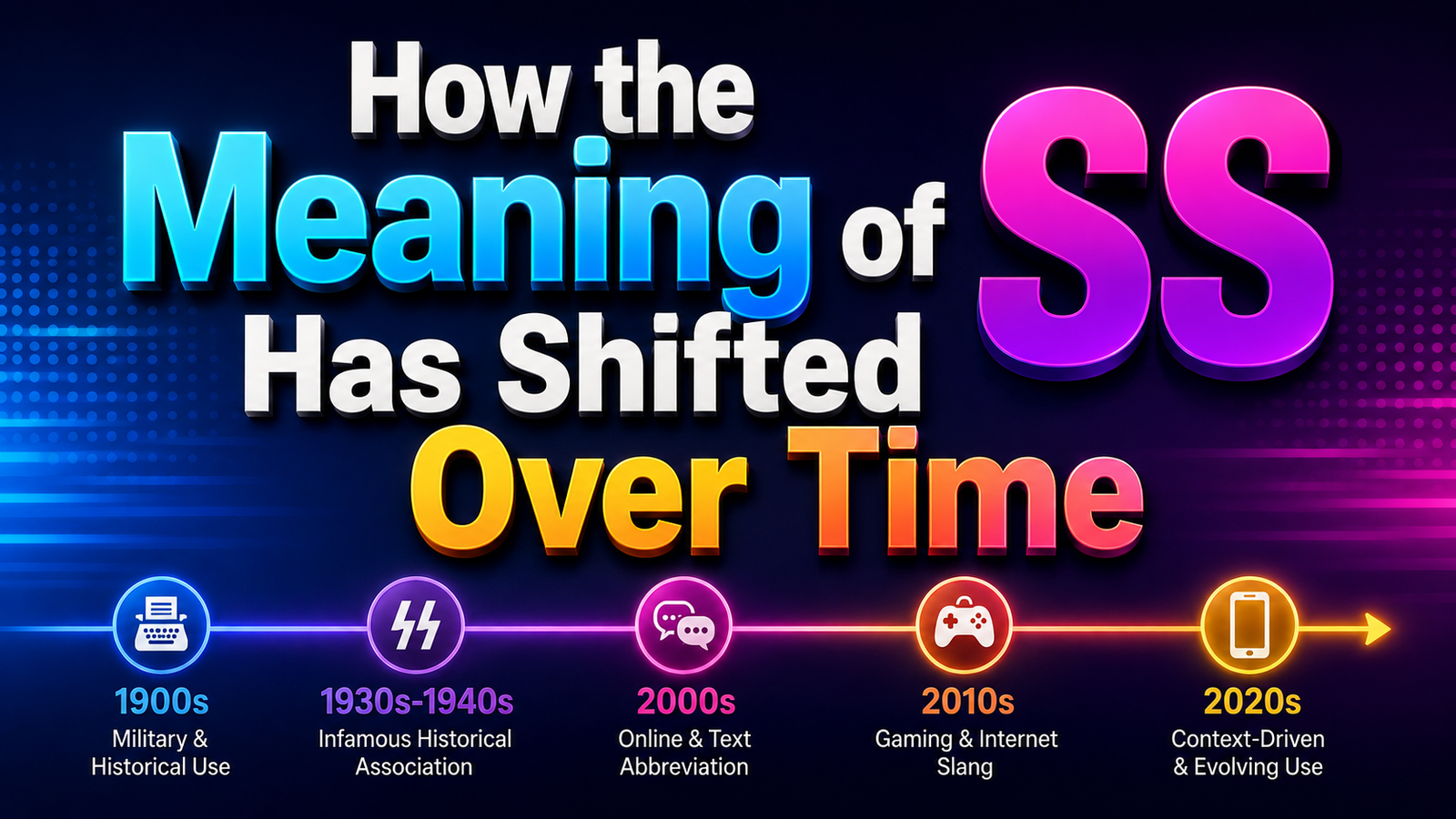
The dominant meaning of SS has genuinely moved over the past several years. Earlier texting culture leaned more on “same” and “so sorry” as casual, everyday shorthand. As screenshot culture grew — driven heavily by group chat drama, meme sharing, and the rise of “receipts” as social currency — screenshot abbreviation usage overtook the others by a wide margin.
A few things drove that shift:
- The rise of “receipts” culture. Screenshotting a deleted tweet, a messy DM, or a controversial post became the internet’s go-to way of proving something actually happened before it disappeared.
- Gaming communities scaling up. As competitive gaming and streaming grew, so did the constant need to capture and share moments — clips, bugs, achievements — fast.
- Group chats getting bigger and messier. Larger group chats generate more “wait, what did they say?” moments, and “send ss” became the fastest way to catch someone up.
By 2026, screenshot is clearly the primary SS abbreviation across most platforms, with Snapstreak holding steady as the one major exception on Snapchat specifically.
It’s worth noting that this kind of shift isn’t unique to SS. Plenty of shorthand terms go through the same lifecycle: a word or phrase gets shortened for convenience, one community adopts it heavily, and then, as usage spreads to new platforms and new audiences, the meaning either stays fixed (like Snapstreak staying locked to Snapchat) or drifts toward whatever meaning is most useful to the largest number of people (like screenshot becoming the default everywhere else). Watching how social media language evolves is honestly a decent way to track which behaviors — like screenshotting for proof — have become baked into how people communicate online.
SS Meaning Cheat Sheet
Bookmark this table for a fast lookup next time you’re stuck decoding a text:
| Meaning | Best Clue | Common Platforms |
|---|---|---|
| Screenshot | Follows “send,” “got,” or “can you” | Discord, texting, Reddit, Twitter/X, gaming |
| Snapstreak | Paired with a number or “streak” | Snapchat |
| Same | Standalone reply to a statement | Instagram, TikTok, general texting |
| So sorry | Opens a message, followed by an explanation | General texting |
| Stainless steel | Appears in a product title/description | Shopping, e-commerce listings |
| Super sexy / savage | Flirtatious or slang-heavy context | Niche slang, casual DMs |
FAQs
What does SS mean in a text message?
It most commonly means “screenshot.” On Snapchat, it usually means “Snapstreak” instead.
Does SS always mean screenshot on every app?
No. Screenshot is the default almost everywhere except Snapchat, where it means Snapstreak.
What does SS mean on Snapchat in 2026?
It still refers to a Snapstreak — the count of consecutive days two users have exchanged snaps.
Is it okay to use SS in professional messages?
No, it’s best avoided. Spell out the full word in workplace or business communication for clarity.
What does SS mean in gaming chats?
It almost always means “screenshot,” used to capture bugs, plays, or proof during matches or voice comms.
conclusion
That’s the full picture of SS meaning in text. Most of the time, it means “screenshot.” On Snapchat, it means “Snapstreak.” Sometimes it just means “same” or “so sorry.” Context is your best clue. Check the app. Check the sentence. The answer usually becomes obvious fast.
Understanding SS meaning in text helps you avoid awkward mix-ups. It also helps you text with more confidence. Slang keeps changing, but this guide covers what matters right now. Keep this cheat sheet handy. Next time someone sends “ss,” you’ll know exactly what they mean.








1 thought on “SS Meaning in Text: Ultimate Guide You Need to Know 2026”