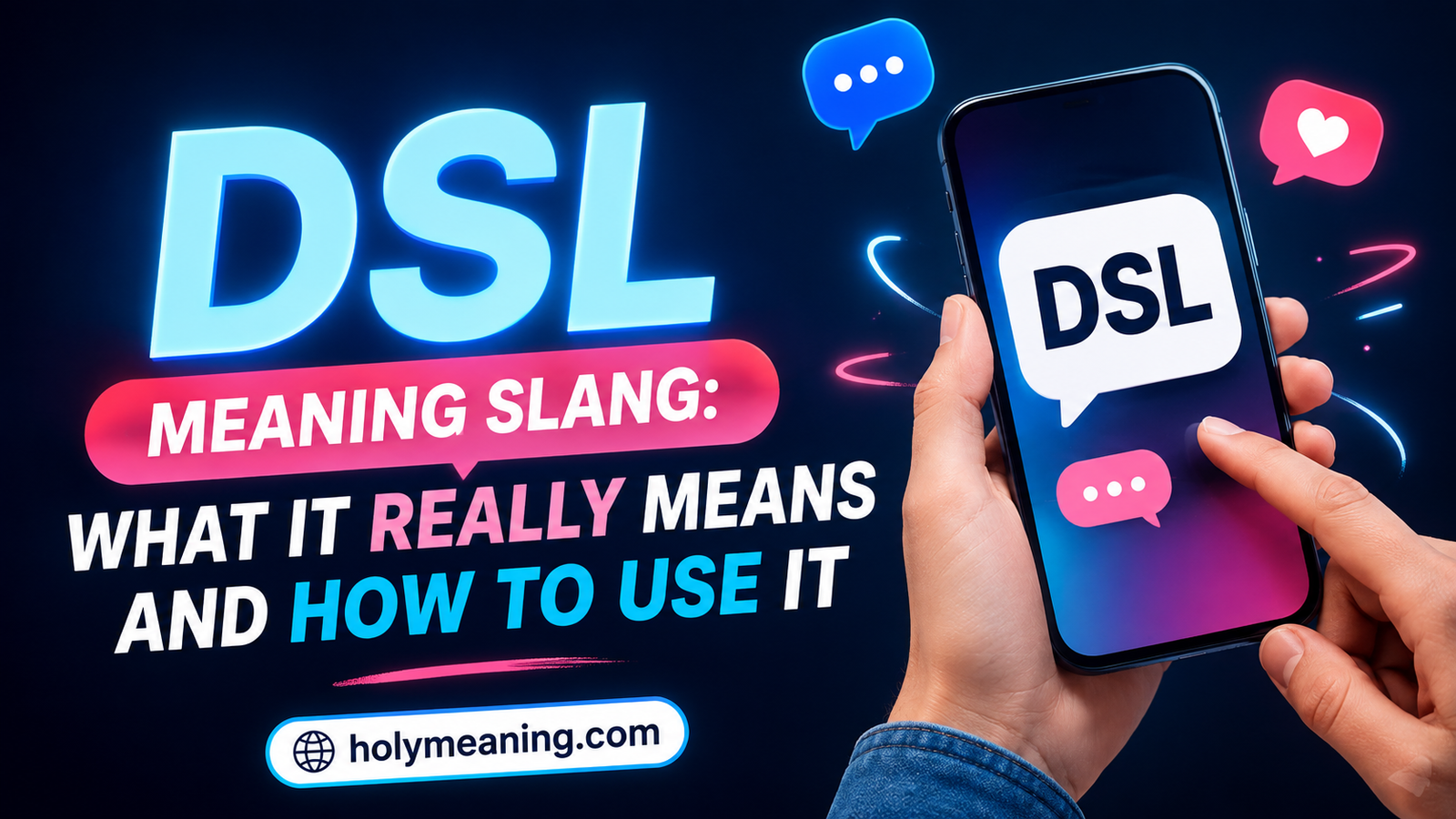
dsl meaning slang, in slang, stands for “dick sucking lips” — a blunt, informal term used across social media to describe someone’s full, plump lips. It’s not related to the internet service that shares the same letters; it’s pure comment-section shorthand.
Picture this: you post a selfie, and within minutes, a stranger’s comment reads “DSL 🔥.” Three letters, zero context, and suddenly you’re left decoding internet slang instead of enjoying the compliment.
That confusion is exactly why this term deserves a closer look. DSL carries a surprisingly complicated reputation — flattering in one setting, crude in another, and constantly mixed up with its tech namesake. Understanding where it lands takes more than a quick definition.
Quick Answer
If you’ve seen DSL pop up in a comment section, a DM, or a caption and thought, “wait, what does DSL mean?” — here’s the short version. In slang, DSL stands for “dick sucking lips,” a crude but usually complimentary term used to describe someone’s full, plump lips. It’s most common on TikTok, Instagram, and X (formerly Twitter), almost always aimed at photos or selfies. There’s also a completely unrelated technical meaning — Digital Subscriber Line, a type of broadband internet connection — but if you’re seeing DSL in a comment thread instead of a router manual, the slang version is almost certainly what’s meant.
That’s the gist. Now let’s get into the details, because context changes everything with this one.
ALSO READ:https://holymeaning.com/imy-meaning-in-text/
What Does DSL Mean?
DSL meaning slang isn’t a single, fixed thing — it depends entirely on where you encounter it. On social media, it’s shorthand for a comment about someone’s lips. In a tech support forum, it’s an acronym for a wired internet service. Same four letters, two completely different worlds. Let’s break down both, starting with the one that’s driving most of the search traffic these days.
The Slang Meaning: “Dick Sucking Lips”
Here’s the blunt truth: DSL slang stands for “dick sucking lips.” It’s a phrase used, mostly by men, to describe lips that are full, plump, and — in the eyes of whoever’s typing it — sexually appealing. It reads as crude on paper, and it is crude. But in practice, the term gets used more like a backhanded compliment than an actual sexual proposition. Someone comments “DSL 🔥” under a selfie, and it’s meant (and usually received) as flattery, however inelegantly phrased.
That’s the tension with this term. It’s built on an explicit, sexual phrase, yet it’s tossed around casually, almost the way people throw around “thicc” or “snack.” Slang terms built around body parts often follow this pattern — they start crude, get repeated so often that the crudeness wears down a little, and end up somewhere between compliment and joke.
A few quick facts worth knowing:
- DSL is almost always written in all caps.
- It’s typically a standalone comment, not part of a full sentence — you’ll see “DSL” by itself far more than “you have DSL.”
- It’s used to describe lips specifically, not a general “you’re attractive” comment.
- The term skews toward being said about women, though it does occasionally get used the other way.
The Other DSL: Digital Subscriber Line
Now for the non-slang meaning, because plenty of people search “DSL meaning” for reasons that have nothing to do with lips. Digital Subscriber Line is a broadband technology that delivers internet access over standard copper telephone lines. It was one of the dominant forms of home internet connection in the 1990s and 2000s, before cable and fiber took over most of the market.
Here’s how it actually works, in plain terms: DSL splits your phone line’s bandwidth so that voice calls and digital connection data can travel on it at the same time, without one interfering with the other. That’s the whole trick — using existing copper wiring more efficiently instead of running new cable to every home. If you want the deeper technical explanation, the Federal Communications Commission has a solid breakdown of DSL and other broadband types.
DSL as a broadband service has largely faded in popularity as fiber and cable have gotten faster and cheaper, but it’s still available in a lot of rural and semi-rural areas where laying new infrastructure isn’t cost-effective. So if your internet provider mentions DSL, that’s the meaning they’re using — nothing to do with lips, nothing to do with slang.
It also helps to know that “DSL” as a technical term isn’t just one single product. There are a handful of variations, and providers rarely explain the difference before signing you up:
- ADSL (Asymmetric DSL) — the most common residential type, offering faster download speeds than upload speeds, which fits how most households actually use the internet (streaming and browsing far more than uploading large files)
- SDSL (Symmetric DSL) — download and upload speeds match, which businesses often prefer for things like video conferencing or hosting
- VDSL (Very High-Bitrate DSL) — a faster variant that works over shorter distances, often used where a provider has run fiber partway and copper the rest of the way
- HDSL (High Bit-Rate DSL) — an older, mostly business-oriented variant used for dedicated data lines before newer standards took over
None of that distinction matters if you’re trying to figure out why a comment section is full of “DSL 🔥” — but if you landed here searching for “DSL internet” or “what does DSL mean” in a router or billing context, that’s the world you’re actually asking about.
How to Tell Which One Someone Means
Honestly, this almost never trips people up in practice, because the context makes it obvious within about half a second. Still, here’s a quick cheat sheet if you’re ever unsure:
| Clue | Points to Slang Meaning | Points to Technical Meaning |
|---|---|---|
| Where you saw it | Instagram, TikTok, or X comments | Internet provider’s website, tech support chat |
| What it’s near | A selfie or photo | Router settings, Wi-Fi troubleshooting |
| Who said it | A stranger or friend commenting on a photo | A customer service rep or IT person |
| Sentence structure | Standalone, often with emojis | Part of a full sentence about internet service |
If someone comments “DSL 😍” under your selfie, nobody’s asking about your Wi-Fi. If your internet provider sends an email titled “Your DSL connection,” nobody’s talking about your face.
Where the Term Came From
Tracing slang back to its exact origin is tricky — nobody stamps a date on the first time a phrase gets said out loud. But the written record gives us a decent picture. Entries for DSL as “dick sucking lips” show up on Urban Dictionary as early as the mid-2000s, which lines up with when a lot of body-focused internet slang started getting codified in comment sections and early social forums.
The phrase has roots that likely trace further back into hip-hop and rap culture, where descriptive, sexually charged compliments about physical features have long been part of the lyrical vocabulary. Slang like this tends to move in a pretty predictable pattern: it starts in music or spoken conversation, gets picked up in online communication through comment sections and forums, and then explodes once a platform with a massive, fast-moving audience — think Vine in the 2010s, then later TikTok — puts it in front of millions of people at once.
That’s more or less what happened with DSL. It sat around as a known-but-niche term for years, then found new life once social media made short, punchy, all-caps comments the default way people react to photos and videos. Digital culture has a habit of resurrecting older slang exactly like this — the phrase didn’t change, but the platform it lives on did.
It’s also worth noting how the acronym itself made the term easier to spread. Spelling out the full phrase feels heavier and more explicit than typing three letters. That shorthand effect is common across internet slang — acronyms strip away some of the discomfort of the literal words, which makes people far more willing to type them in a public comment section than they’d ever be to say the full phrase out loud. BRB, IDK, and SMH all work the same way: useful precisely because the letters feel lighter than the words behind them. DSL just happens to be one of the more explicit examples of that pattern.
There’s also a practical reason it stuck around specifically as an acronym instead of an emoji or a single word: it lets people be specific. A heart-eyes emoji says “you look good” broadly. DSL says, very precisely, this feature specifically caught my attention — which is part of why it’s endured as its own slang acronym rather than getting replaced by a generic reaction.
How People Actually Use DSL in Real Conversations
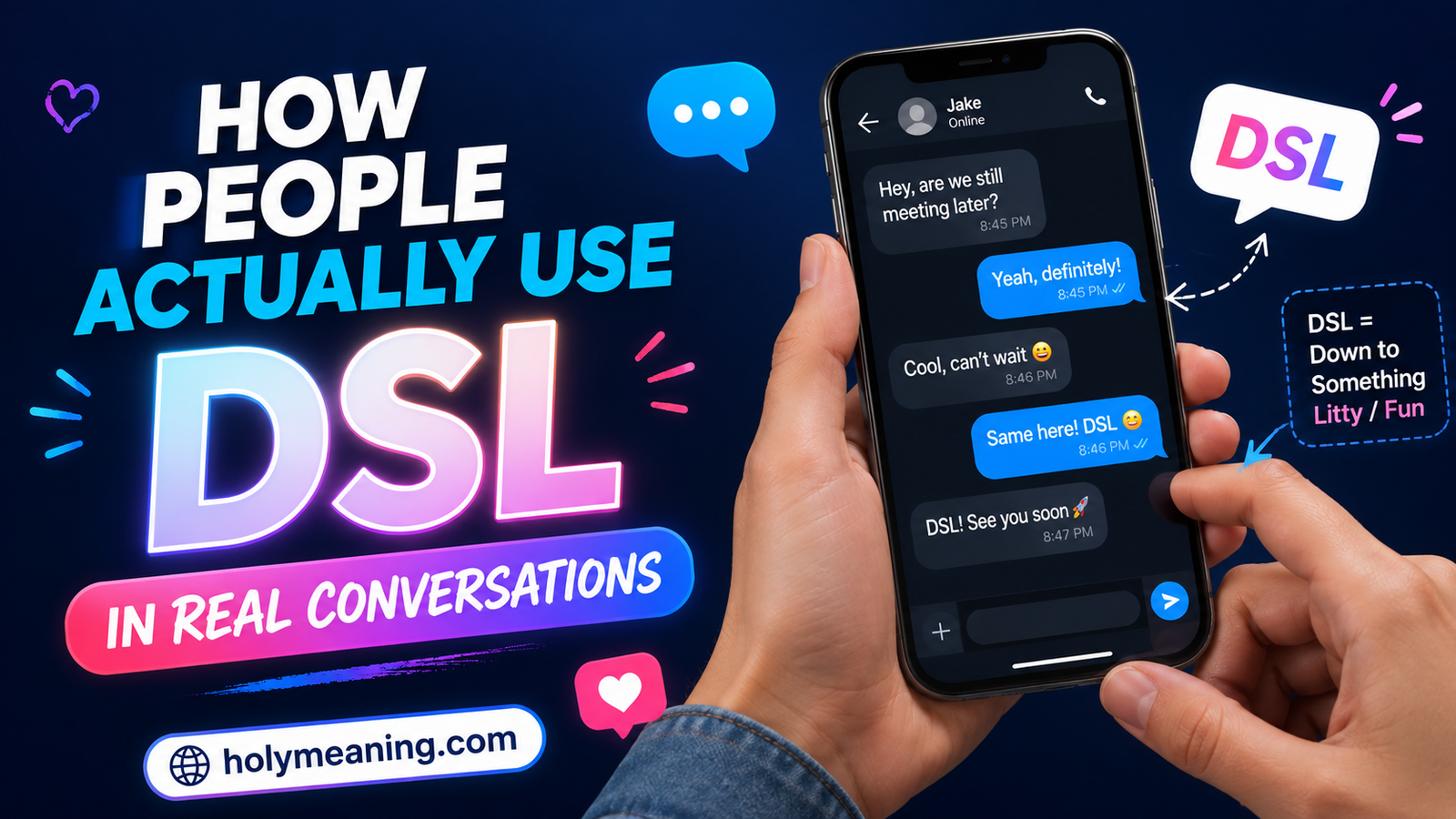
Definitions only get you so far. The real question is how this thing plays out in casual conversations, and the honest answer is: it depends heavily on who’s saying it, and why. Let’s walk through the main ways DSL shows up in actual chat examples and comment threads.
As a Genuine Compliment
This is the most common use case by a wide margin. Someone posts a photo, their lips look good in the lighting, and a friend or follower drops “DSL” as a genuine compliment. It’s blunt and it’s crude, sure, but the intent behind it is almost always positive — the commenter is saying “you look attractive,” just using slang instead of a more traditional flattering comment.
A typical exchange looks like this:
Comment: “girl DSL 😩🔥” Reply: “lmaooo thank you”
Notice the tone — light, playful, mutually understood. Nobody in that exchange thinks it’s a serious or threatening remark. It’s the digital equivalent of a whistle, minus the whistle.
As a Joke Between Friends
Among close friend groups, DSL frequently gets used as a bit — an inside joke rather than a literal comment. Friends will drop it under each other’s selfies specifically because it’s a little ridiculous, turning what could be an awkward or overly serious compliment into something funny instead. This version relies entirely on the conversational context: the people involved know each other, know the joke, and know nobody means it as a real statement.
This is where texting and comment-section culture diverge a bit from face-to-face conversation. Nobody says “DSL” out loud to a friend at lunch. It’s a written, screen-based joke, built for online platforms where a quick reaction gets more mileage than a full sentence.
As a Crude or Disrespectful Comment
Here’s the flip side. Because the underlying phrase is explicit, DSL can absolutely land as an offensive comment rather than a playful one — especially when it comes from a stranger, shows up unsolicited, or gets directed at someone who clearly didn’t invite that kind of attention. A rude comment dressed up as a compliment is still, functionally, a rude comment.
This distinction matters a lot, and it’s worth sitting with for a second: the exact same four letters can be warm and funny in one context, and genuinely disrespectful language in another. There’s no neutral, universal reading of DSL — it’s entirely dependent on the relationship between the two people and the setting they’re in.
In Reaction to Selfies, Filters, or Lip Fillers
A big chunk of DSL usage happens specifically in response to lip-focused content — selfies with a certain angle, videos showing off a new lip filler, or posts using filters that plump or exaggerate the lips. In these cases, DSL functions almost like a genre-specific comment, the way “10/10 no notes” gets used for outfit posts. It’s become a recognizable, somewhat predictable reaction within a specific corner of social media usage, especially in beauty and lifestyle content.
DSL on Social Media
Social media is where this slang lives and breathes — outside of that world, most people would have no idea what the letters mean. Usage does shift a little depending on the app, though the underlying meaning stays the same everywhere.
| Platform | Typical Usage | Common Context |
|---|---|---|
| TikTok | Fast, high-volume comments | Reactions to lip filters, glam trends, “get ready with me” videos |
| Compliment-style comments and captions | Selfies, mirror photos, lip filler reveal posts | |
| X (Twitter) | Joking or exaggerated usage | Quote-tweets, meme threads, reply-guy culture |
A few notes on how the term behaves across these social networks:
- On TikTok, DSL tends to show up in bursts — one comment triggers a dozen more saying the same thing, since TikTok’s comment culture rewards short, punchy, repeatable reactions.
- On Instagram, it leans slightly more toward being a direct positive comment, often paired with fire emojis or heart-eyes.
- On X, the term gets used more loosely and more often as a joke, sometimes stretched into memes that have nothing to do with an actual photo.
Across all three online platforms, though, the core function is identical: it’s a quick, low-effort way to react to something lip-related, positive or negative depending entirely on tone.
ALSO READ:https://holymeaning.com/asf-meaning-in-text/
Is DSL Offensive?
Short answer: it can be, and whether it actually is depends on more than just the word itself. Let’s break down the real factors.
When It Reads as Playful
Between friends, in a group chat, or under a post where the person clearly invited that kind of attention (a glam shot, a filter trend, a joke caption), DSL reads as friendly remark territory. Nobody’s offended, everybody moves on, and it functions the same way any other slang praise does — quick, informal, understood by everyone involved.
When It Crosses a Line
Things shift fast when the comment comes from a stranger, especially an adult commenting on a minor’s photo (which is a serious red flag regardless of the platform’s rules), or when it’s directed at someone in a professional, public, or otherwise non-consenting context. A comment that would be harmless from a close friend can feel genuinely inappropriate — or outright predatory — from someone with no relationship to the poster at all.
There’s also the matter of volume. One DSL comment might barely register. A flood of them, especially from strangers, starts to feel less like scattered compliments and more like harassment, which is a real problem creators on TikTok and Instagram deal with regularly.
Why Context and Relationship Decide the Tone
This is the part most explainers skip, and it’s the part that actually matters. The exact same word can be:
- A joke — said between friends who both know it’s not serious
- A compliment — said with clear positive intent, invited or not
- A crude, unwanted remark — said by a stranger with no relationship to the person
What separates these three isn’t the word. It’s:
- Who’s saying it — a friend versus a stranger versus someone in a position of authority
- Where it’s said — a private chat versus a public comment section
- Whether it was invited — a caption that jokes about lips versus a plain photo with no such framing
- The relationship’s history — an established pattern of joking versus a first-time interaction
As one social media researcher put it in a piece on internet compliment culture, slang like this “gets its meaning entirely borrowed from the relationship it’s spoken inside of” — the phrase itself is just a container. That’s a good way to think about DSL. It’s not offensive or harmless by default. It’s offensive or harmless depending on everything around it.
A Quick Case Study
Picture the same comment — “DSL 😍” — landing in three different scenarios.
Scenario one: A close friend comments it under a selfie you posted in your group chat’s shared story. You laugh, reply with a laughing emoji, and it’s forgotten in ten minutes. Nobody reads this as anything but a joke, because the relationship carries the tone.
Scenario two: A follower you don’t know comments it under a photo you posted for a completely unrelated reason — say, a graduation picture. It feels off immediately, not because the word changed, but because there’s no relationship there to soften it, and the context (a graduation post) wasn’t inviting that kind of comment at all.
Scenario three: An adult comments it repeatedly under a teenager’s posts. Same four letters, dramatically different situation — this one crosses from “crude joke” into genuinely concerning territory, and it’s exactly the kind of pattern that platforms’ harassment and safety policies are built to catch.
Three identical comments, three completely different read on them. That’s the entire lesson of DSL slang, and honestly, of most internet slang built around physical compliments: the word is neutral cargo. The context is doing all the actual work.
When to Use It (and When Not To)
If you’re thinking about actually typing “DSL” under someone’s post, here’s a practical guide.
Low-Risk Situations
- You’re commenting on a close friend’s post and you have an established pattern of joking like this
- The person’s caption or content clearly invites playful reactions (lip filler reveals, glam trend videos)
- You’re replying to someone who has used the term themselves, so you know they’re comfortable with it
Situations to Avoid
- Commenting on a stranger’s photo, especially without any prior interaction
- Commenting on anyone who appears to be a minor — this isn’t just about tone, it’s a serious boundary
- Professional or work-related contexts, including LinkedIn or work Slack, obviously
- Anytime you’re unsure whether the person would find it funny or find it invasive
Safer, Clearer Alternatives
If your actual goal is to compliment someone’s lips without the crude baggage attached to DSL, here are a few options that land as a genuine compliment without any risk of misreading:
- “Your lips look amazing in this pic”
- “That lip color is everything”
- “Obsessed with your smile in this one”
- “Your makeup is so well done, especially your lips”
None of these require the recipient to translate an acronym, and none of them carry the same risk of coming across as crude or presumptuous.
One more thing worth flagging: tone doesn’t just come from word choice, it comes from delivery too. “Your lips look amazing in this pic 🔥” and “your lips look amazing in this pic” read slightly differently, and even punctuation changes how a positive comment lands. If you’re not sure how a compliment will be received, keeping it simple and sincere is almost always the safer bet over something clever or slang-heavy.
DSL vs. Similar Slang Terms
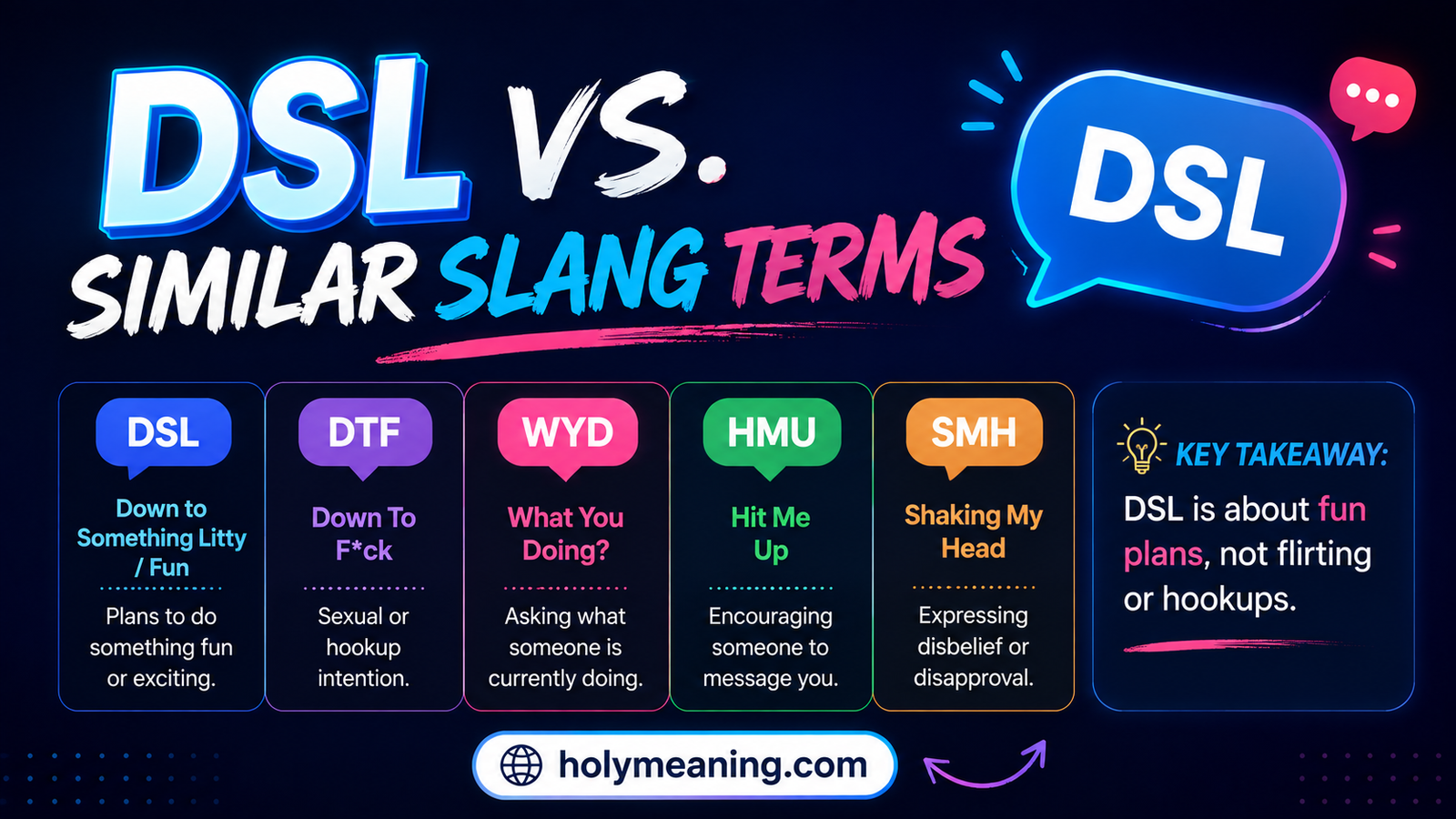
DSL doesn’t exist in isolation — it’s part of a broader family of internet expressions built around physical compliments. Here’s how it compares to a few related slang terms you’ll often see in the same comment sections.
| Term | Meaning | Typical Tone |
|---|---|---|
| DSL | Full, plump lips | Compliment, sometimes crude |
| BDE | “Big D Energy” — confident, effortlessly cool presence | Playful, admiring |
| Snack | An attractive person | Casual compliment |
| Thicc | Curvy or full-figured body | Casual, sometimes crude compliment |
| Glow up | A noticeable positive change in appearance | Praise, often used for before/after content |
These slang comparisons matter because DSL isn’t a weird outlier — it fits a well-established pattern of body-focused online terminology that’s blunt, a little crude, and built for fast reactions rather than thoughtful phrasing. Understanding one of these terms usually makes the others easier to place, since they share the same DNA: short, punchy, and meant to be typed in three seconds flat.
ALSO READ:https://holymeaning.com/ss-meaning-in-text/
Common Misunderstandings About DSL
A few misconceptions come up again and again with this term, so let’s clear them up directly.
- Mixing it up with the internet term. Plenty of people search “what does DSL mean” expecting an answer about broadband, and land on the slang definition instead (or vice versa). Context is really the only reliable way to tell them apart — there’s no visual difference between the two acronyms.
- Assuming it’s always crude or predatory. As covered above, tone depends heavily on relationship and setting. Treating every instance as automatically hostile misreads a lot of genuinely friendly usage.
- Assuming it’s always a harmless joke. The opposite mistake is just as common — assuming the term is universally lighthearted ignores the very real cases where it’s used inappropriately, especially by strangers or toward minors.
- Generational confusion. Parents, older relatives, or anyone less plugged into social media slang often encounter DSL completely out of context — say, in a teenager’s comment section — and have no idea what it means, which can lead to some awkward conversations. This is a real source of slang confusion across age groups, and it’s one of the more common common errors people make when first encountering the term.
- Thinking it’s brand new. Given how much traction it’s gotten on TikTok in recent years, some assume DSL is a fresh coinage. In reality, it’s been documented in slang dictionaries for close to two decades — the platform changed, not the phrase.
- Assuming there’s a formal, agreed-upon definition. Slang doesn’t work like a dictionary entry with a single locked-in meaning. Two different friend groups can use DSL slightly differently — some treat it strictly as a physical description, others use it more loosely as a general term of approval. There’s no official body ruling on DSL terminology; usage is whatever a given community has settled into.
- Believing it only applies in comment sections. While comments are the most visible place to see it, DSL shows up plenty in private texting too — between friends reacting to a photo sent directly, not just in public posts. The private usage tends to be even more casual and joke-driven than the public version, since there’s no audience to perform for.
Sorting through these common errors is really just a matter of remembering two things: context decides the meaning, and slang almost never has a single fixed rulebook behind it. Different corners of the internet will always bend a term like this slightly differently.
FAQs
Is DSL a compliment or an insult?
Usually a compliment, though a crude one — it’s meant to describe attractive lips. Tone depends entirely on who’s saying it.
What does DSL mean besides the slang term?
It also stands for Digital Subscriber Line, a type of broadband internet delivered over phone lines.
Is DSL still used in 2026?
Yes — it remains active in TikTok and Instagram comment sections, especially on lip filler and glam-style content.
Did DSL originate on TikTok?
No, it predates TikTok by nearly two decades, with documented use going back to the mid-2000s.
Is it okay to comment DSL on a stranger’s post?
Not really recommended — it’s best kept to friends who already joke this way, since unsolicited use can come across as crude.
conclusion
So, that’s the real story behind DSL meaning slang. It’s a crude but usually friendly term for full, plump lips. Context decides everything. Among friends, it’s a joke. From strangers, it can feel off. Read the room before you type it.
Next time you spot “DSL” in a comment, you’ll know exactly what it means. DSL meaning slang isn’t complicated once you understand the context behind it. Use it carefully, or skip it and give a clear compliment instead. Either way, you’re no longer left guessing.