wtv meaning in text stands for “whatever,” a shorthand people use in texting and social media to skip typing the full word. It shows up in casual replies, comment sections, and DMs whenever someone wants to answer fast without spelling things out.
Three letters, endless interpretations. WTV can sound relaxed one second and ice-cold the next, and misreading it has derailed more conversations than most people realize.
This guide breaks down the real WTV meaning in text across platforms, group chats, and dating, plus how to read the tone behind it and respond the right way every single time.
What Does WTV Mean? (Quick Answer)
WTV stands for “whatever.” That’s the whole definition, at its core. It’s a shorthand people use in texting, DMs, and comment sections to skip typing out the full word, usually when they’re replying fast, multitasking, or just don’t feel like spelling things out.
So if you’ve been wondering what does WTV mean, the short version is: it’s a lazy-typing stand-in for “whatever,” used the same way “whatever” gets used in spoken English — sometimes to say “I don’t mind,” sometimes to say “I’m done arguing,” and sometimes to say “I genuinely couldn’t care less.”
Here’s the catch. WTV meaning doesn’t stop at the dictionary definition. The letters are static, but the emotional weight behind them moves around constantly. That’s the part most quick explainers skip, and it’s the part that actually matters when you’re staring at your phone trying to decode a text from your friend, your date, or your group chat.
ALSO READ:https://holymeaning.com/mb-mean-in-text/
The Full Breakdown — Why “Whatever” Isn’t Always Simple
“Whatever” is one of those English words that carries a whole spectrum of feeling inside one syllable. Say it out loud in five different tones and you’ll hear five different messages: agreement, boredom, irritation, resignation, even affection. WTV in text inherits all of that baggage, minus the tone of voice that would normally tell you which one you’re getting.
That’s the core tension of texting slang in general. Written language strips out the things that usually carry emotional context — pitch, pace, facial expression, the pause before someone answers. WTV slang fills that gap with three letters and leaves you to fill in the rest. Most of the time, the surrounding words in the message do the heavy lifting.
A few things shape how WTV lands:
- Punctuation. “wtv” feels breezy. “WTV.” feels final.
- Capitalization. All caps often signals frustration; lowercase usually signals nonchalance.
- What came before it. Was the conversation calm, or had it already gotten tense?
- Who sent it. A close friend saying wtv reads very differently than someone you just started talking to.
Real Texting Examples
Nothing explains this better than seeing it in action. Here’s how the same three letters shift meaning across different texting examples:
| Message | Likely Meaning | Tone |
|---|---|---|
| “wtv works for me, you pick” | No real preference | Relaxed |
| “wtv. forget I said anything” | Shutting the topic down | Hurt or annoyed |
| “lol wtv you’re so dramatic” | Playful teasing | Affectionate |
| “WTV. I’m done talking about this” | Ending an argument | Frustrated |
| “down for wtv tonight, just let me know” | Open to any plan | Easygoing |
| “wtv, I guess” | Reluctant agreement | Resigned |
These real text examples make one thing clear: the word itself never changes, but the message around it does all the talking. If you’re trying to read a WTV text, look at the sentence as a whole instead of the abbreviation in isolation.
Where WTV Came From
Texting slang usually starts out of necessity, and WTV is no exception. Back when SMS messages were capped at 160 characters, every letter counted, and abbreviations like wtv, brb, and omg let people say more in less space. Shortening “whatever” to three letters was a practical move before it became a stylistic one.
The abbreviation picked up real momentum as messaging moved off basic SMS and onto apps built for speed. WhatsApp messages, which launched in 2009, and Snapchat messages, which arrived in 2011, both leaned into quick, informal exchanges — the kind of environment where typing “whatever” in full starts to feel almost too formal. As those platforms grew, so did the casual vocabulary people used on them.
From there, WTV texting spread the way most internet slang spreads now: through repetition across digital platforms rather than through any single event or origin point. TikTok comment sections, Instagram captions, and group chats all helped cement it as a default shorthand rather than something niche or generational. It’s not a new invention so much as an old attitude — indifference, dismissal, easy agreement — wearing a shorter outfit.
How to Read the Tone — Because WTV Changes Meaning by Context
If there’s one skill worth taking from this entire article, it’s this: conversation tone in texting lives in the details around the word, not in the word itself. Learning to spot those details is the real answer to “what does wtv mean” in any specific message you’re staring at.
Punctuation and Capitalization Cues
Small formatting choices carry real signal in casual texting:
- No punctuation (“wtv you decide”) tends to read as neutral or agreeable.
- A period after it (“wtv.”) often signals the sender wants the topic closed, sometimes with an edge.
- All caps (“WTV”) usually raises the emotional temperature, leaning toward frustration.
- An exclamation point (“wtv!”) can flip it toward enthusiasm or sarcasm, depending on what surrounds it.
- Emojis attached (😂, 🙄, ❤️) often do more work than the word itself, either softening it or sharpening the sting.
What Comes Before or After It
This is the single biggest clue in any WTV message. A sentence that continues past “wtv” almost always explains the sender’s actual state of mind. Compare:
- “wtv, that’s fine” → genuine indifference
- “wtv, don’t worry about it” → deflecting, possibly hiding annoyance
- “wtv you say” → sarcastic agreement, not real agreement
- “wtv, I don’t even care anymore” → exhaustion, possibly the end of patience
If WTV shows up alone, with nothing before or after it, that’s often the most telling version of all — a short, blunt way of ending a conversation without elaborating.
Relationship Context
The same word means different things depending on who’s typing it. A close friend using wtv mid-conversation is probably just being efficient. A new match on a dating app using it might be signaling low investment. A partner using it during a disagreement could be masking real frustration behind casual language. Context from the relationship itself often tells you more than the text message does.
WTV Across Platforms
WTV social media use isn’t identical everywhere. Each platform has its own rhythm, and that rhythm shapes how the abbreviation gets used and interpreted.
Texting and iMessage
In direct iMessage texting and regular SMS, WTV tends to show up in one-on-one conversations where tone is easier to gauge because you already know the person. It’s common in quick replies about plans, opinions, or small decisions — “wtv you want to eat” is a completely ordinary, low-stakes message between people who talk often.
Instagram, TikTok, and Snapchat
On Instagram slang and comment threads, WTV often appears with a more performative edge — a way of signaling coolness or detachment publicly, not just privately. TikTok slang moves fast, and WTV frequently gets stacked with other abbreviations or paired with reaction videos, sometimes losing its literal meaning entirely and becoming more of a vibe than a statement. Snapchat messages lean casual by design, since the app itself is built around quick, disappearing content, so WTV there usually reads as low-effort but not necessarily negative — it fits the format.
Group Chats and Gaming
In group chats, WTV often functions as a neutral vote — someone opting out of a decision without holding up the conversation. “wtv, whatever the group wants” is a common way to avoid being the person who slows down plans. In gaming chat, especially during matches or on voice-adjacent text platforms, WTV shows up as a fast way to move past a disagreement about strategy or team decisions without breaking focus on the game itself.
| Platform | Typical Use | Common Tone |
|---|---|---|
| iMessage/SMS | Personal, one-on-one replies | Neutral to warm |
| Comments, DMs, captions | Cool, detached | |
| TikTok | Comment sections, stitched replies | Fast, trend-driven |
| Snapchat | Quick disappearing chats | Low-effort, casual |
| Group chats | Decision-making, planning | Neutral, non-committal |
| Gaming chat | Strategy disagreements | Quick, dismissive |
WTV Variations You’ll Actually See
WTV rarely stays in its plain, three-letter form for long. Internet slang tends to mutate, and these WTV variations are some of the most common combinations you’ll actually run into.
- “Down for wtv” — This means someone is open to any plan, with no particular preference. If a friend texts “I’m down for wtv tonight,” they’re telling you they’ll go along with whatever gets decided, no pushback.
- “WTV atp” — This pairs “whatever” with “at this point,” and it usually shows up after someone has been dealing with a frustrating situation for a while. It signals a kind of tired surrender rather than casual indifference.
- “WTV u say” — This is a slightly sarcastic way of agreeing without really meaning it. It’s common when someone is tired of going back and forth and just wants the conversation to end, even if they don’t fully agree.
These texting variations matter because they carry more specific emotional information than plain “wtv” does. “WTV atp” tells you there’s history behind the message. “Down for wtv” tells you the person is genuinely flexible, not dismissive. Learning to spot these WTV phrases gives you a much sharper read than treating every instance of the abbreviation the same way.
WTV vs. Similar Slang

WTV sits in a crowded field of short, low-effort replies, and it’s worth knowing how it differs from its closest relatives. This slang comparison helps clarify why people reach for WTV specifically instead of something else.
| Abbreviation | Full Meaning | Typical Feel | Key Difference from WTV |
|---|---|---|---|
| WTV | Whatever | Indifferent, sometimes dismissive | Broadest emotional range, most context-dependent |
| IDK | I don’t know | Uncertain, non-committal | Signals lack of knowledge, not lack of care |
| IDC | I don’t care | Flatly indifferent | More direct and blunt than WTV, less flexible in tone |
| K | Okay | Curt agreement | Almost always reads as cold or annoyed |
| Fine | Acceptance or resignation | Can be genuine or passive-aggressive | Similar ambiguity to WTV, but sounds more final |
The IDK meaning centers on uncertainty — the person genuinely doesn’t have an answer. The IDC meaning is more emphatic than WTV; it states indifference directly rather than implying it. K meaning, on its own, is famously one of the coldest replies in texting, often read as a sign someone is annoyed even when they aren’t. Fine meaning shares WTV’s ambiguity, but it tends to sound more like a closed door, while WTV can still leave room for a follow-up.
What sets WTV apart is its flexibility. It can soften an “I don’t care” into something friendlier, or it can carry real edge when paired with cold punctuation. Few other pieces of online slang cover that much emotional ground with so few characters.
ALSO READ:https://holymeaning.com/gng-meaning-in-text-2/
How to Respond When Someone Texts You “WTV”
Getting a WTV text back can feel like being handed a locked box with no key. The good news: the message almost always contains its own instructions, once you slow down and read past the abbreviation itself. Here’s how to handle WTV response situations depending on what you’re picking up.
When It’s Casual or Neutral
If the conversation has been relaxed and the WTV fits naturally — deciding on food, picking a movie, agreeing on plans — take it at face value. A simple, easy casual response works fine here: “cool, I’ll pick then” or “sounds good.” Overanalyzing a genuinely neutral WTV can create tension where none existed.
When It Feels Dismissive or Passive-Aggressive
If WTV shows up after tension, or lands with a period and no follow-up, it’s often a dismissive response wrapped in a short word. In this case, calling it out gently tends to work better than matching the energy. Something like “you sound annoyed, did I say something wrong?” opens the door without escalating. Mirroring a clipped “wtv” back usually just deepens the standoff.
When You’re Genuinely Unsure
Sometimes there’s just not enough information in the message to tell. When that happens, asking directly is almost always the better move than guessing. A quick “wait, are you good?” or “did that come off weird? just checking” clears things up fast and shows you’re paying attention, which most people appreciate more than a guessing game. Good text etiquette means reading the room, but it also means being willing to ask when the room is hard to read.
Quick tip: If you’ve reread a WTV text three times trying to figure out the tone, just ask. It takes ten seconds and saves you from building an entire narrative around three letters.
WTV in Dating and Relationships
WTV in dating carries some of the highest stakes of any context on this list, mostly because early-stage texting already comes loaded with uncertainty. A single word can feel like it’s carrying way more information than it actually is.
Early-Stage Texting
In the first few weeks of talking to someone, dating apps conversations tend to be closely watched — people read into response times, word choice, everything. A WTV here can genuinely mean low investment, especially if it shows up in response to plans or questions about getting together. “wtv day works” about scheduling a date is usually harmless. “wtv, up to you” repeated across several messages, without much else, can be a quieter signal that someone isn’t especially engaged.
Mid-Relationship Use
Once relationship texting settles into a comfortable rhythm, WTV usually loses most of its weight. Established couples and long-term situations often use it the same way close friends do — as shorthand, not as a statement. “wtv you want for dinner, I’m easy” in a stable relationship rarely means anything beyond exactly what it says.
Soft Rejection
Here’s where WTV gets trickier: it can function as a soft rejection, a way of disengaging without a direct confrontation. If someone starts replying with wtv to things they used to respond to with real enthusiasm — plans, questions, even jokes — that shift in energy is often more telling than the word itself. It’s rarely a single WTV that signals disinterest; it’s a pattern of short, low-effort replies where longer ones used to be.
Dating communication researchers and relationship writers alike tend to agree on one point: single-word replies aren’t inherently bad news, but a consistent drop in effort usually is. Watch the trend, not the individual text.
ALSO READ:https://holymeaning.com/tw-meaning-in-text/
Common Mistakes People Make With WTV
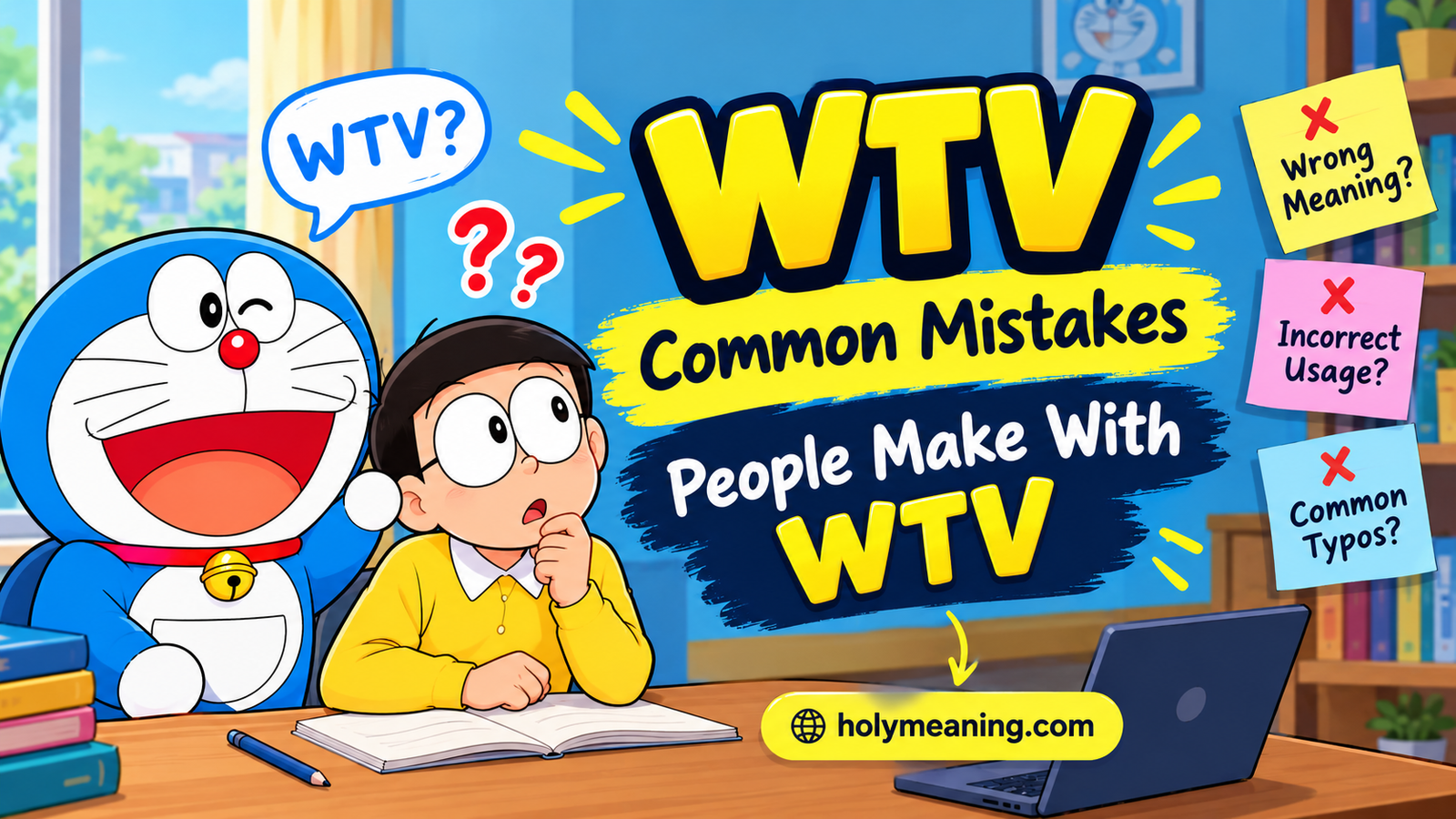
A few missteps come up again and again with this abbreviation, and they’re worth flagging directly.
- Using it in professional settings. WTV has no place in work emails, client messages, or formal communication. It reads as careless at best and disrespectful at worst.
- Assuming it always means indifference. As shown throughout this guide, WTV can mean agreement, affection, exhaustion, or dismissal. Treating every instance the same is a fast way to misread someone.
- Overreacting to a single message. One WTV rarely tells the whole story. Patterns across a conversation matter more than any single word.
- Matching cold energy with cold energy. Responding to a tense WTV with an equally clipped reply tends to escalate things rather than resolve them.
- Ignoring platform norms. A WTV that’s completely normal in a Snapchat exchange might read as oddly casual in a more formal group chat setting.
Quick-Reference Cheat Sheet
For anyone who wants the short version without scrolling back through the whole guide, here’s a compact summary of the WTV meaning in text across the situations covered above.
| Situation | What WTV Likely Means |
|---|---|
| Deciding on plans, no punctuation | Genuine flexibility |
| “wtv.” after an argument | Wanting to end the conversation, possible frustration |
| “wtv” with emojis or laughter | Playful, affectionate |
| Repeated short replies over time | Possible disengagement |
| “down for wtv” | Open to anything, no preference |
| “wtv atp” | Tired of a frustrating situation |
| “wtv u say” | Sarcastic or reluctant agreement |
| Used in a professional message | Inappropriate for the setting |
At the end of the day, WTV is one word doing the job of several. It can mean “I don’t mind,” “I’m annoyed,” “I’m done,” or “I’m just being lazy with my thumbs” — and the only real way to know which one you’re looking at is to read the whole message, not just the abbreviation. Once you get used to spotting the small cues — punctuation, timing, what surrounds it, who sent it — decoding a WTV text stops being a guessing game and starts being second nature.
FAQs
What does WTV mean in a text?
WTV stands for “whatever.” It’s texting shorthand used to show indifference, agreement, or a desire to move on from a topic.
Is WTV rude or offensive?
Not inherently. WTV’s tone depends entirely on context, punctuation, and the conversation around it — it can be casual, playful, or dismissive.
What does “down for wtv” mean?
It means someone is open to any plan with no particular preference, like agreeing to whatever activity gets decided.
Is WTV the same as IDC?
Not exactly. IDC (“I don’t care”) is more direct and blunt, while WTV carries a wider emotional range, from relaxed to passive-aggressive.
Should I use WTV in professional messages?
No. WTV is strictly casual slang and reads as careless or disrespectful in work emails or formal communication.
conclusion
WTV meaning in text really comes down to one word doing many jobs. It can signal easy agreement, quiet frustration, or genuine indifference. The letters never change, but the feeling behind them shifts with tone, punctuation, and who’s texting.
Once you understand WTV meaning in text, decoding it gets much easier. Look at the full message, not just the abbreviation. Notice patterns over time. And when you’re still unsure, just ask. A quick question beats a guessing game every time.






1 thought on “WTV Meaning in Text: What It Really Means for You!”