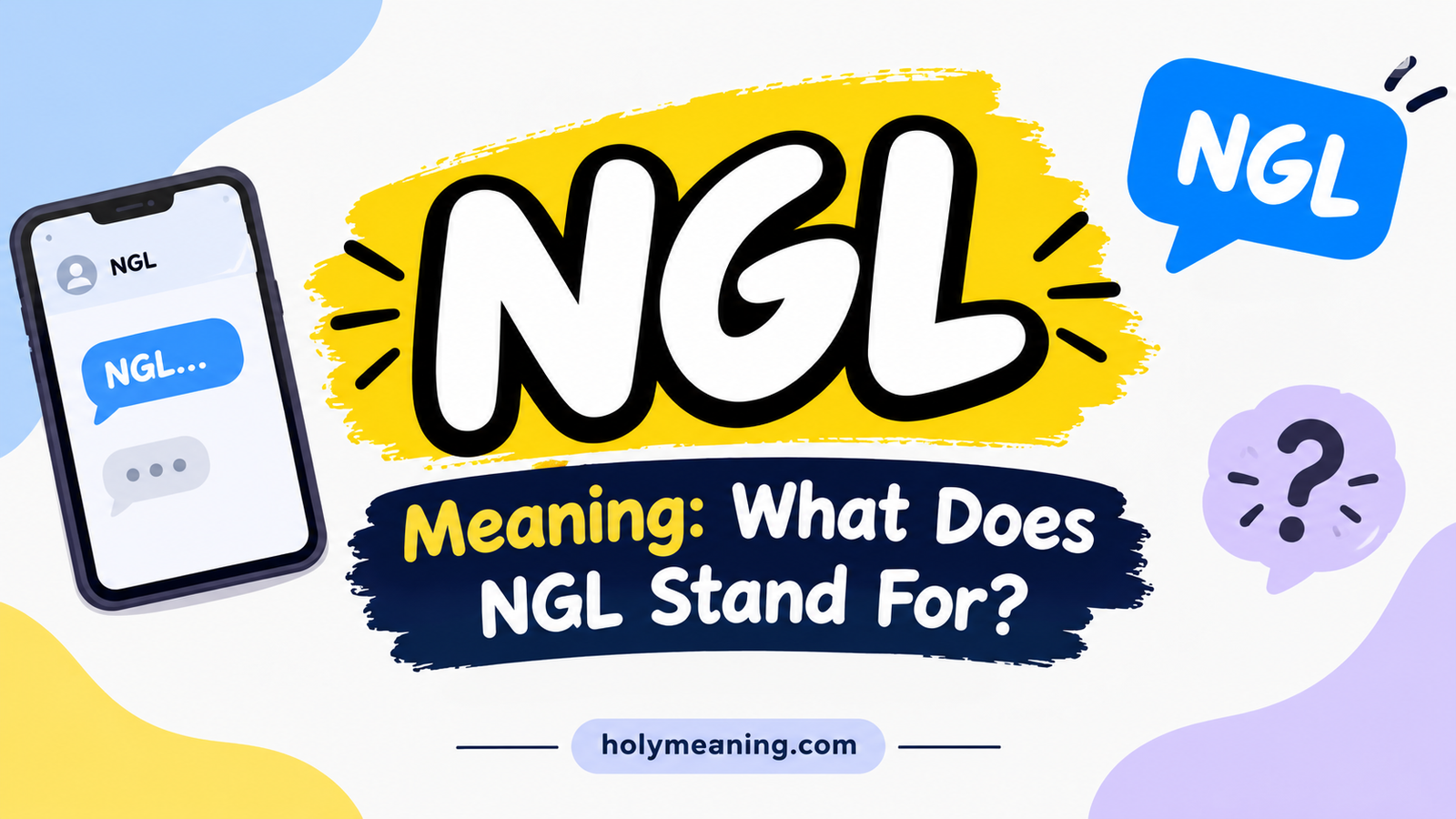
NGL meaning comes down to one simple phrase: “not gonna lie.” It’s a texting and social media abbreviation people use to flag honesty before sharing an opinion, a confession, or an unfiltered thought.
Here’s the twist, though: those three letters lead a double life online. One version softens your next sentence with a little vulnerability. The other belongs to a viral anonymous-messaging app that landed in a federal lawsuit.
Beyond the slang, NGL also shows up in oil and gas markets, referring to natural gas liquids traded across the energy sector. Same acronym, three completely different worlds — and this guide untangles all of them, clearly and completely.
NGL Meaning: What Does NGL Stand For?
If you’ve seen “NGL” pop up in a text, a comment, or an Instagram story and paused for a second, you’re not alone. It’s one of the most common pieces of texting slang floating around right now, and it shows up so often that most people never stop to ask what it actually stands for
NGL Meaning at a Glance
Before we go deep on each definition, here’s the quick answer for anyone in a hurry.
| Meaning | Context | Example |
|---|---|---|
| Not gonna lie | Texting, social media, casual conversation | “NGL, that movie was better than I expected.” |
| Anonymous messaging app | Instagram, Snapchat, social media culture | “Someone sent me a wild question on NGL.” |
| Natural gas liquids | Energy industry, oil and gas, commodities trading | “NGL prices rose after the pipeline disruption.” |
In everyday texting and social media, the NGL slang meaning wins by a landslide. If a friend, a stranger online, or a comment section uses it, they almost certainly mean “not gonna lie.” The app and the finance term are real, but they live in narrower worlds — one on your phone’s App Store, the other in industry reports you’d only read if you worked in energy or finance.
The Three Meanings of NGL
Here’s where the confusion usually starts. Someone searches “what does NGL mean” expecting one clean answer, and instead they find three unrelated definitions competing for the same three letters. Let’s break each one down so there’s no ambiguity left.
NGL as Slang (“Not Gonna Lie”)
At its core, NGL is a conversational English filler phrase that means exactly what it says: I’m not going to lie to you right now. People use it to signal that what follows is an honest, sometimes slightly uncomfortable, opinion.
Think of it as a softer cousin of “honestly” or “truthfully.” When someone starts a sentence with NGL, they’re essentially prepping you for a frank opinion — something they might normally hold back or soften. It’s a verbal (or textual) heads-up that honesty is incoming, whether that honesty is flattering or not.
A few things make NGL distinct from just saying “honestly”:
- It carries a slightly confessional tone, like the speaker is admitting something.
- It’s almost exclusively used in casual writing — texts, DMs, comments, captions.
- It often precedes an opinion the speaker assumes might be unpopular, awkward, or a little too honest.
- It works as an interjection more than a formal sentence starter, which is part of why it feels so natural in fast-paced digital conversation.
You’ll see it everywhere: TikTok captions, Twitter/X replies, group chats, YouTube comments. It’s become such a standard piece of internet slang that plenty of people use it without ever consciously thinking about the words behind the letters.
NGL the App (Anonymous Q&A on Instagram)
The second major meaning is a literal product: NGL, an app built entirely around anonymous messages. Users post a personal link — usually to their Instagram Story — inviting friends and followers to send anonymous questions or comments. It’s built on the same idea as older platforms like Sarahah or Formspring, just repackaged for a newer generation of social media users.
NGL Labs launched the app in November 2021 out of Venice Beach, California, and it grew fast — fast enough to become one of the most downloaded apps on the App Store at its peak. The pitch was simple and catchy: “Ask me anything,” with the promise of total anonymity for whoever’s asking.
We’ll cover exactly how the app works, plus its serious safety and privacy problems, in a dedicated section further down. For now, just know this: if someone mentions “the NGL app” instead of just saying NGL in a sentence, they’re talking about this specific product, not the slang.
NGL in Finance & Energy
The third meaning belongs almost entirely to industry professionals. In the energy sector, NGL stands for “natural gas liquids” — a group of hydrocarbons that get separated out during natural gas processing. This includes:
- Ethane
- Propane
- Butane
- Isobutane
- Natural gasoline (pentanes+)
These petroleum products matter a lot in oil and gas markets and in commodities trading, since NGL prices move independently of crude oil and natural gas prices and often reflect their own supply-and-demand dynamics. Energy analysts, traders, and pipeline companies use the term constantly in earnings reports, market updates, and trading data.
If you’re not in that world, you’ll probably never run into this NGL definition. But if you’ve ever read a financial report and wondered why NGL kept showing up next to barrel counts and pipeline capacity figures, now you know.
How to Use NGL in a Sentence
Using NGL correctly is pretty forgiving — it’s flexible slang, not a rigid grammar rule. But there’s a pattern worth understanding if you want it to sound natural instead of forced.
NGL almost always functions as a sentence opener or a standalone interjection. It signals before the honest opinion arrives, similar to how you might say “honestly” or “to be real with you” at the start of a thought. You’ll rarely see it buried in the middle of a sentence, and using it that way tends to read a little clunky.
Here’s the basic sentence usage pattern:
NGL + [honest opinion or admission]
That’s really it. No punctuation rules beyond a comma after it, and even that’s optional in casual texting.
Real Example Sentences
Seeing it in context makes the pattern click faster than any explanation. Here are several example sentences covering different tones:
- “NGL, I forgot we had plans tonight.”
- “NGL, that new album is actually pretty good.”
- “That restaurant was mid, NGL.”
- “NGL I was nervous before the interview.”
- “She’s talented, NGL, but her attitude needs work.”
- “NGL, I’ve watched that show three times already.”
Notice how it can sit at the start of the sentence (most common) or get tacked on at the end for emphasis, almost like an afterthought confession. Both work fine in casual writing, and native speakers switch between the two depending on rhythm and how the sentence flows out loud.
One quick tip: NGL pairs naturally with slightly vulnerable or blunt statements. If what follows is completely neutral (“NGL, the sky is blue”), it can read as sarcastic or ironic, because the phrase implies there was something to be honest about.
Where NGL Came From
Slang doesn’t appear out of nowhere, and NGL has a pretty traceable path from spoken phrase to texting abbreviation.
The Phrase “Not Gonna Lie” Before It Was an Acronym
“Not gonna lie” existed as an ordinary spoken phrase long before anyone shortened it into three letters. People have used it in casual American English conversation for decades as a way to preface an honest, sometimes reluctant admission. It’s a close relative of phrases like “I’ll be honest” or “truth be told” — all serving the same social function of flagging sincerity before delivering an opinion.
What makes “not gonna lie” distinct is its slightly defensive undertone. Saying “honestly” just adds emphasis. Saying “not gonna lie” implies there was a temptation not to be honest, which makes whatever follows feel a bit more candid, even a bit more vulnerable.
When NGL First Appeared Online
As texting and early social platforms took off in the 2000s and 2010s, phrases like this got compressed the same way “to be honest” became TBH and “in my opinion” became IMO. NGL followed the same abbreviation logic that shaped most chat slang: save keystrokes, keep the tone casual, and let context fill in the rest.
By the time platforms like Twitter, and later TikTok and Instagram, became dominant spaces for casual text-based expression, NGL had already settled into everyday use as one of the most recognizable slang abbreviations in digital slang. It didn’t need explaining anymore — it had become part of the shared vocabulary of online communication.
NGL vs Similar Slang: TBH, FR, FRFR, IMO
NGL doesn’t operate alone. It belongs to a small family of honesty-signaling abbreviations that show up constantly in text messages and social comments. Here’s how they compare:
| Term | Full Meaning | Tone / Nuance |
|---|---|---|
| NGL | Not gonna lie | Confessional, slightly vulnerable honesty |
| TBH | To be honest | Neutral honesty, less confessional than NGL |
| FR | For real | Emphasizes sincerity or agreement, less about confession |
| FRFR | For real for real | Doubled-up emphasis, stronger conviction than FR |
| IMO | In my opinion | Frames a statement as subjective, not necessarily confessional |
The key distinction: NGL vs TBH comes down to tone. Both signal honesty, but NGL tends to carry a hint of reluctance or vulnerability, like you’re admitting something you might normally keep to yourself. TBH feels more matter-of-fact — you’re just stating your honest take without the confessional undertone.
FR meaning and FRFR meaning work a little differently. They’re less about revealing a hidden truth and more about backing up sincerity or agreement, almost like saying “I mean it” or “seriously.” You’ll often see FR used to co-sign someone else’s statement (“that’s crazy, FR”) rather than to introduce a new opinion.
IMO meaning stands apart from all of these because it explicitly frames a statement as subjective. Where NGL implies “here’s an honest truth,” IMO implies “here’s just my take, take it or leave it.”
In practice, people mix and match these constantly — “NGL FR that was rough” isn’t unusual in fast-paced texting, even if it’s redundant from a strict grammar standpoint.
Is It OK to Use NGL at Work or in Formal Writing?
Short answer: usually not, but context matters more than you’d think.
When It’s Fine
NGL fits comfortably in low-stakes, informal workplace communication. A few situations where it won’t raise eyebrows:
- Casual Slack messages between teammates you know well
- Internal team chats with an established relaxed tone
- Quick, informal check-ins with close coworkers
- Company culture that already leans casual (startups, creative teams, social media roles)
Used sparingly in these settings, NGL reads as friendly and approachable rather than unprofessional.
When to Avoid It
On the flip side, there’s a long list of situations where NGL will undercut how professional you come across:
- Client-facing emails or proposals
- Formal reports, memos, or documentation
- Resumes, cover letters, or LinkedIn summaries
- Communication with senior leadership you don’t know well
- Any writing meant to represent your company externally
The general rule: if you wouldn’t say “honestly” or “truthfully” in that same message, don’t swap in NGL either. Formal writing calls for spelled-out, standard vocabulary, and slang abbreviations — however common in social media slang — tend to read as careless or overly casual in professional contexts.
How to Respond When Someone Says NGL to You
When someone hits you with an NGL statement, they’re usually opening up a small window of honesty, and how you respond matters. A few solid approaches, depending on the situation:
- If it’s a compliment: Just say thanks and keep it light. “NGL that outfit is fire” deserves a simple “haha thank you!” not overanalysis.
- If it’s constructive criticism: Acknowledge it without getting defensive. “Appreciate you being real with me” works well and keeps the conversation open.
- If it’s a confession or vulnerable admission: Match the tone. If a friend says “NGL I’ve been struggling lately,” respond with genuine care, not a joke.
- If it’s playful or teasing: Play along. NGL statements in group chats are often lighthearted, so a witty comeback usually lands better than a serious one.
The common thread: NGL signals that someone chose honesty over comfort, so meeting that with a dismissive or sarcastic response can feel like you’re brushing off their candor.
Common Mistakes People Make With NGL
Even though NGL is simple slang, people trip up on it in a few predictable ways:
- Using it in formal writing. As covered above, this is the most common misstep — dropping NGL into an email to a client or a formal document instantly clashes with the tone.
- Confusing the slang with the app. Saying “I got an NGL” without context can leave people unsure whether you mean a message or a general confession.
- Overusing it as a verbal tic. When every other sentence starts with NGL, the phrase loses its impact. It works best as an occasional emphasis tool, not a constant filler.
- Pairing it with statements that aren’t actually confessions. Using NGL before something completely obvious or neutral can come off as sarcastic when that’s not the intent.
- Assuming it always means positive news. NGL can introduce criticism just as easily as a compliment — don’t assume good news is coming just because someone opens with it.
The NGL App: What It Is and How It Works
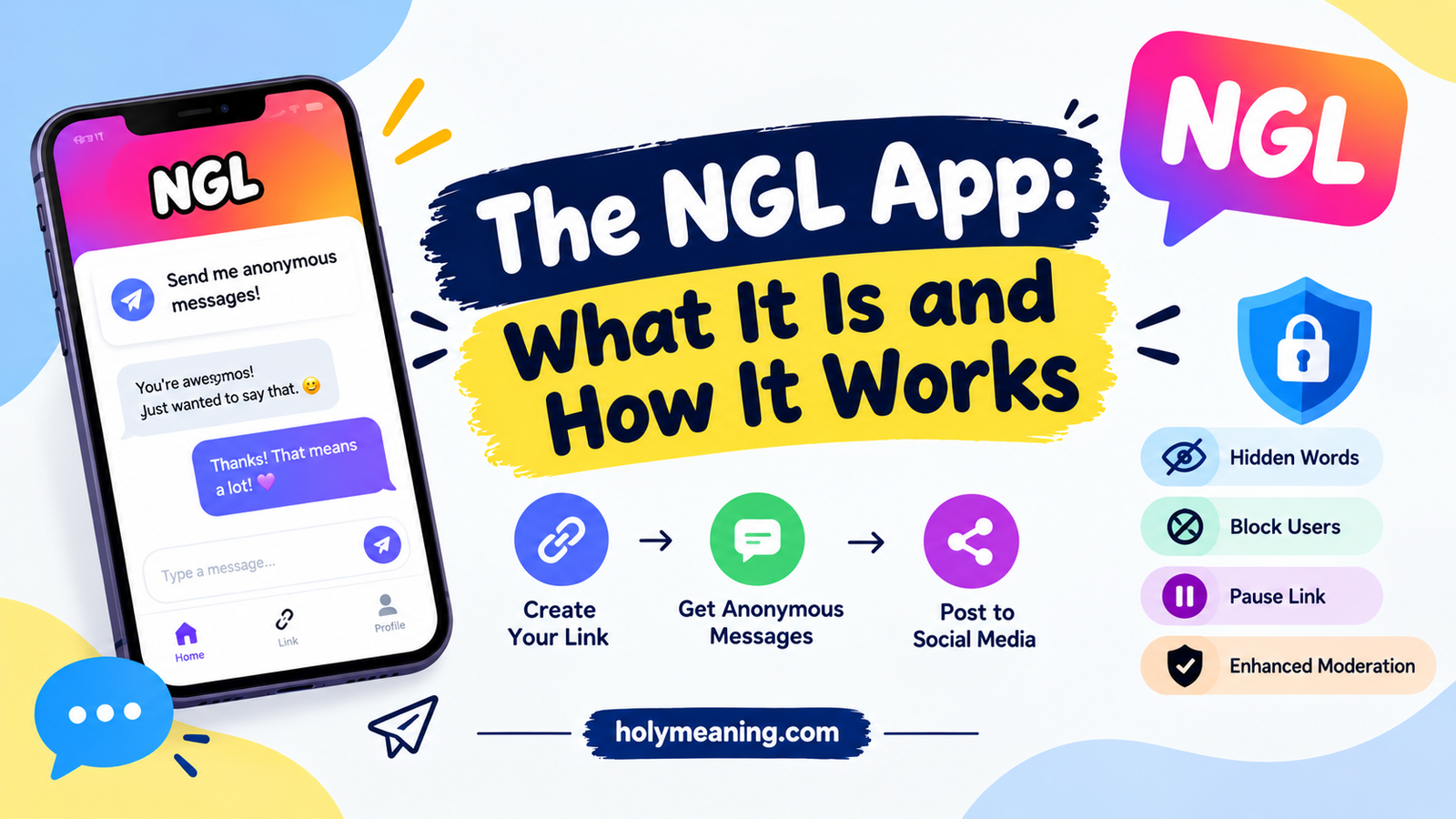
Now let’s dig into the app itself, since it’s a completely separate topic from the slang and deserves its own explanation.
NGL is a mobile app built around one core feature: letting users receive anonymous questions and comments from their social media followers. The pitch is simple. You get a personal link, you share it — usually via an Instagram messages Story sticker — and anyone who clicks it can send you a message without revealing who they are.
The app was developed by NGL Labs, founded by Raj Vir and Joao Figueiredo, and it launched in November 2021. It reportedly grew to a user base topping 200 million, and at one point became the most downloaded product on Apple’s App Store. Its integration with Snapchat and Instagram helped it spread quickly, especially among teenage and young adult users looking for a low-effort way to get anonymous feedback and attention from their followers.
In December 2025, ownership of the app changed hands entirely. The app was acquired by the smartphone rewards company Mode Mobile, shifting development away from the original NGL Labs team.
How the Anonymous Messages Feature Works
The mechanics are straightforward:
- A user downloads the app and creates a personal NGL link.
- They share that link on Instagram, Snapchat, or another platform, usually inviting followers to “ask me anything.”
- Anyone who clicks the link can send a question or comment without their identity being shown to the recipient.
- The recipient sees the message in the app and can respond, share it publicly on their Story, or ignore it.
- NGL historically promoted a paid “NGL Pro” subscription that claimed to offer hints about who sent a particular message.
That last point is exactly where the app ran into serious legal trouble.
Safety, Privacy, and Legal Issues Parents Should Know
This is the part of the NGL definition that matters most for parents, and honestly, for anyone considering using the app at all.
In July 2024, the Federal Trade Commission and the Los Angeles County District Attorney’s Office filed a joint lawsuit against NGL Labs. The FTC announced it was banning NGL from marketing or offering its app to users under 18 — the first time the agency had taken that specific action against an app. The company agreed to settle.
The complaint detailed several deceptive practices, and they go well beyond a typical privacy slip-up:
- NGL will pay $5 million to settle the lawsuit, covering civil penalties and consumer restitution.
- The FTC and the Los Angeles DA’s office alleged that the app and its co-founders marketed NGL to minors, and falsely claimed that its AI content moderation system filtered out harmful messages and cyberbullying.
- The complaint alleged NGL sent fake questions that appeared to come from real people to trick users into paying its $9.99 monthly subscription to get hints about who sent the messages.
- The FTC said NGL resorted to automatically sending users fake computer-generated questions in 2022 after failing to generate interest in its app, with users receiving fake messages such as “are you straight?” or “I know what you did.”
- By collecting information from children under age 13 without parental consent, NGL also violated laws designed to protect children’s privacy online.
The pattern the FTC described was blunt: the app told worried users, especially minors, that paying for NGL Pro would reveal who was harassing or messaging them — but the “hints” often pointed to messages that were never sent by a real person in the first place.
There’s a direct quote from FTC Chair Lina Khan worth including here, since it captures the core of the ruling:
“NGL marketed its app to kids and teens despite knowing that it was exposing them to cyberbullying and harassment. In light of NGL’s reckless disregard for kids’ safety, the FTC’s order would ban NGL from marketing or offering its app to those under 18.”
Beyond the deceptive-messaging findings, cyberbullying was a central concern throughout the case. Users reported serious harm connected to the app’s anonymous format, and regulators found that NGL’s advertised AI moderation didn’t perform anywhere close to what the company claimed.
For parents, the practical takeaway is simple: as of the 2024 settlement, NGL is legally barred from marketing or offering its service to anyone under 18. That doesn’t mean the app is impossible for a minor to download, but it does mean the company can no longer legally target that age group, and it faces ongoing scrutiny over how well it enforces that restriction.
A quick summary of the legal outcome:
| Issue | Finding |
|---|---|
| Age restriction | Banned from marketing/offering the app to users under 18 |
| Settlement amount | $5 million in penalties and restitution |
| False AI moderation claims | Confirmed by FTC investigation |
| Fake anonymous messages | Confirmed — used to drive paid subscriptions |
| Children’s privacy law violations | Confirmed — collected data from under-13 users without consent |
| Current ownership | Acquired by Mode Mobile, December 2025 |
If you’re a parent trying to decide whether the app belongs on your teenager’s phone, this settlement is essential context — not a rumor or a vague privacy concern, but a documented, legally confirmed pattern of deceptive and unsafe practices.
FAQs
Is NGL a positive or negative word?
Neither — it’s neutral. NGL just signals honesty is coming, whether that’s a compliment, criticism, or plain observation.
What does NGL mean on Snapchat or Instagram?
Same as everywhere else: “not gonna lie.” On these platforms it can also refer to the NGL app, which integrates with Instagram Stories for anonymous Q&A.
Is the NGL app safe to use in 2026?
It’s still active under new ownership (Mode Mobile, since December 2025), but it remains legally barred from marketing or offering its service to anyone under 18 after a 2024 FTC settlement over deceptive practices and cyberbullying risks.
What’s the difference between NGL and TBH?
Both mean “honestly,” but NGL carries a more confessional tone, while TBH reads as a plain, matter-of-fact statement.
What does NGL mean in the oil and gas industry?
It stands for “natural gas liquids” — hydrocarbons like propane, butane, and ethane separated during natural gas processing.
conclusion
NGL meaning really comes down to context. Most of the time, it just means “not gonna lie” — a quick, honest way to start a sentence. But those three letters also point to a controversial app and a real term in the energy world. Knowing all three keeps you from getting confused online.
Next time you see NGL in a text or a headline, you’ll know exactly what’s going on. The NGL meaning shifts with the setting, but now you’ve got every version covered — slang, app, and finance — with nothing left to guess.