Ion meaning in text refers to a piece of internet slang, most commonly a phonetic spelling of “I don’t,” used across casual conversations on social media platforms and everyday text messages.
Three tiny letters, one massive identity crisis: half science class, half internet culture, and somehow both make total sense once you know the context.
Rooted in African American Vernacular English, “ion” strips spoken contractions down to their essential sound, blending seamlessly into TikTok captions, Twitter threads, and Instagram comments. Understanding it means never misreading a friend’s message again.
Let me know if you’d like the word count adjusted or a different tone.
What Does Ion Mean in Text? (Quick Answer)
In text messages, “ion” almost always means “I don’t.” It’s a phonetic spelling, not a random abbreviation someone invented for fun. Say “I don’t know” out loud, fast and casual, and you’ll notice it collapses into something that sounds a lot like “ion know.” That’s the whole trick behind it.
There’s a second, less common meaning too: “In Other News,” usually written in all caps as ION, used to signal a topic transition mid-conversation. And just to clear up the confusion at the source — yes, “ion” is also a real scientific term for a charged atom or molecule. That’s not related to the slang at all. It’s a coincidence of spelling, nothing more.
The Real Meanings of ION in Texting
Before diving deep into each one, here’s a quick reference table so you can see the full picture of ion meaning at a glance:
| Meaning | Type | Common In | Example |
|---|---|---|---|
| “I don’t” | Phonetic spelling | Casual texting, TikTok, Twitter/X | “ion feel like going out” |
| “In Other News” | Acronym | Topic changes, forums, older internet slang | “ION, did you see the game?” |
| Ion (chemistry) | Real scientific word | Science class, not slang at all | “The ion has a negative charge” |
The ion slang meaning you’ll run into 90% of the time is the “I don’t” version. The “In Other News” usage still shows up, but it’s noticeably less frequent in day-to-day casual conversations than it used to be.
One more thing worth flagging: you’ll see some blog posts claiming “ion” also means “It’s On Now” or “I Only Need.” Those don’t hold up under scrutiny. There’s no meaningful trail of usage backing them up. Treat them as filler content, not real definitions.
Where Did “Ion” Actually Come From?
This is where most explainer articles get lazy. The truth is that “ion” has two separate, unrelated origin stories, and they didn’t develop at the same time or for the same reason.
The “I don’t” version comes from African American Vernacular English (AAVE). In AAVE and in fast casual speech more broadly, consonant sounds at the end of words like “don’t” often soften or drop entirely. The spelling is based on the colloquial pronunciation of “I don’t,” especially in Black English. Try saying “I don’t know” quickly a few times. You’ll hear it start to sound like “ion-oh” without even trying.
This “I don’t” usage picked up mainstream traction roughly between 2015 and 2018, once platforms like Twitter and later TikTok helped spread the spelling to a much wider audience. It didn’t appear out of nowhere in the 2010s, though. Internet slang rarely does. It had already been circulating in online platforms and text communication for years before it broke into wider pop culture.
The “In Other News” version has a completely different backstory, and it’s actually older. It traces back to broadcast news, where anchors used the phrase “In Other News” to transition between unrelated stories, a formatting habit dating to the mid-20th century. Internet users, particularly early social media and forum participants, picked up the phrase in the early 2000s as a way to shift topics in online conversations, eventually shortening it to the acronym for efficiency.
So here’s the interesting part: two completely different histories, decades apart, converged on the exact same three letters. One came from spoken dialect compression. The other came from broadcast journalism shorthand. Neither has anything to do with the chemistry term, even though dictionary.com now runs both slang definitions alongside the scientific one, which tells you how mainstream this usage has become.
A quick timeline
- Mid-20th century — “In Other News” becomes a standard broadcast transition phrase
- Early 2000s — Internet forums shorten it to “ION” as a topic-change signal
- Long-running — AAVE speakers use “I don’t” → “ion” in casual, spoken conversation
- 2015–2018 — The “I don’t” spelling spreads widely via Twitter and TikTok
- 2018 onward — Pop culture references (including a Moneybagg Yo track literally titled “Ion Get You”) cement it in social media platforms vocabulary
- 2020s–present — Firmly embedded in digital communication, especially among younger users
How “Ion” Is Used in Real Conversations
Context is everything here. The exact same three letters can mean two different things depending on what surrounds them, so you have to read the sentence, not just the word.
Ion Meaning “I Don’t”
This is the version you’ll encounter constantly in peer communication, DMs, group chats, and comment sections. It functions as a contraction, replacing “I don’t” the same way “I’m” replaces “I am.”
Real examples of how it plays out:
- “ion think that’s a good idea”
- “ion care what they said”
- “ion know why he’s mad”
- “ion feel like cooking tonight”
Notice the pattern: it’s always followed by a verb, just like “I don’t” would be. That’s your biggest tell for this meaning.
There’s also cultural weight behind this specific usage. Memphis rapper Moneybagg Yo released a 2018 track with the slang built right into the title, cementing “ion” as a recognizable part of hip-hop and internet vernacular rather than something confined to private texting. When slang crosses over into music, that’s usually a sign it’s here to stay, at least for a while.
ION Meaning “In Other News”
This version works completely differently. It’s not a contraction at all. It’s a conversation transition tool, functioning almost exactly like saying “anyway” or “so, moving on” out loud.
Example: “ION, are we still doing dinner Friday?” Here, ION isn’t replacing a verb phrase. It’s signaling a topic transition, pivoting the conversation away from whatever was just discussed.
Quick tip: if “ion” is followed directly by a verb (“ion know,” “ion care”), it means “I don’t.” If it’s followed by a comma and a completely unrelated new topic, it’s functioning as “In Other News.”
Does Capitalization (ion vs. ION) Actually Matter?
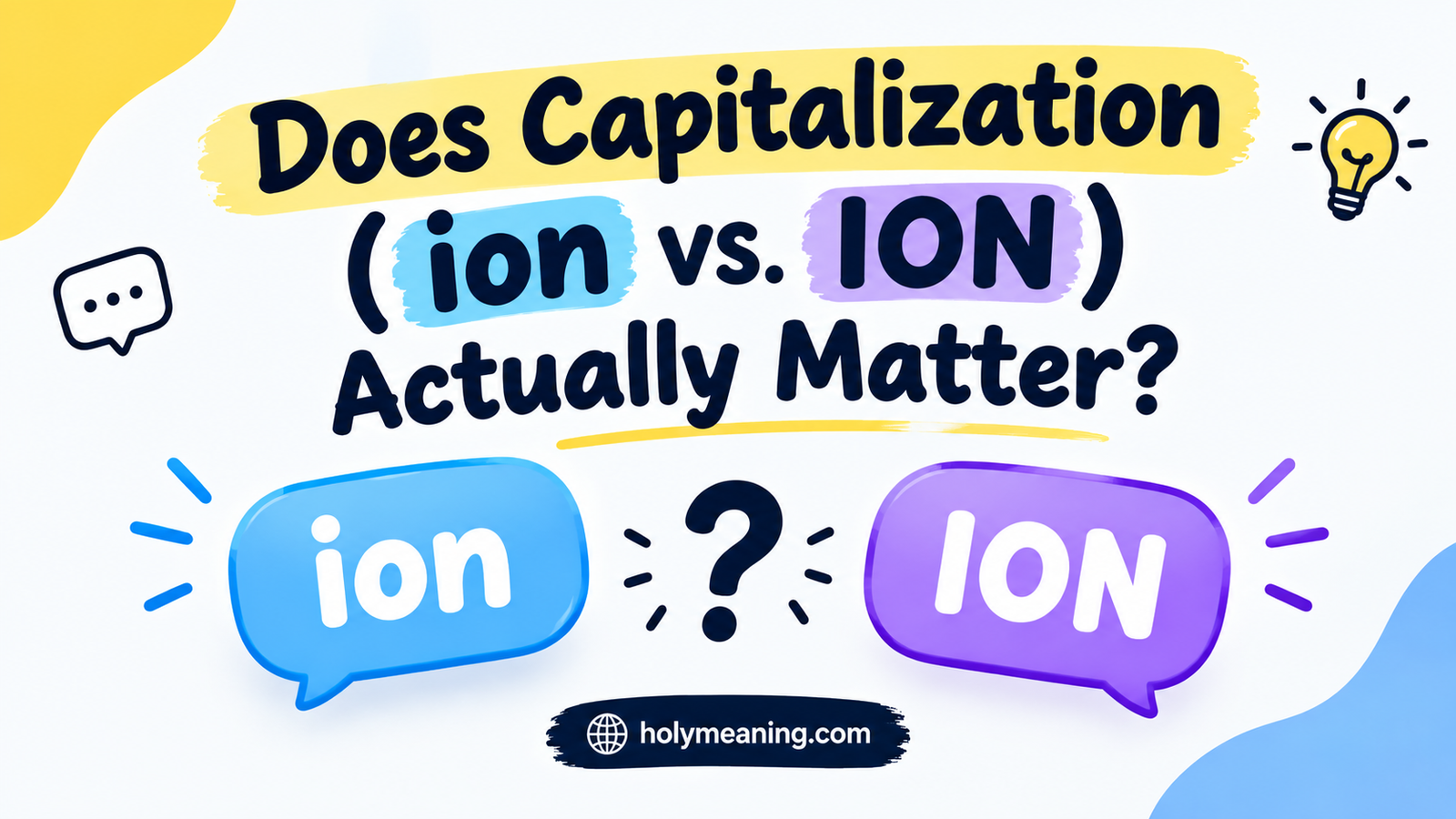
Short answer: not really, and most articles claiming otherwise are stretching for content. Texting doesn’t have a reliable style guide, so capitalization varies wildly by person, by keyboard autocorrect settings, and by how quickly someone’s typing. You’ll see lowercase “ion” used for “In Other News” and all-caps “ION” used for “I don’t” just as often as the reverse.
Context, not case, is what actually tells you the meaning. Don’t rely on capitalization as your decoder ring here. It’ll lead you astray more often than it helps.
Platform-by-Platform: Where You’ll See Ion
“Ion” isn’t tied to one specific app the way some slang is. It’s genuinely cross-platform at this point, though its visibility does shift depending on where you’re scrolling.
| Platform | How Common | Typical Context |
|---|---|---|
| TikTok | Very common | Captions, comment sections, voiceover text |
| Twitter/X | Very common | Tweets, replies, quote-tweet commentary |
| Common | Captions, story replies, DMs | |
| Snapchat | Common | Chat messages between friends |
| Text messages (SMS/iMessage) | Common | Casual, everyday communication between peers |
| Workplace communication | Rare to nonexistent | Considered unprofessional in business writing |
The pattern across every one of these social media platforms is consistency: it shows up in informal chats and friendly conversations, and it essentially disappears the moment the setting turns formal.
How to Respond When Someone Texts You “Ion”
If you’re not fluent in this particular corner of texting slang, getting a message with “ion” in it can feel like decoding a puzzle. Here’s a simple breakdown to help you reply appropriately.
| They text | Likely meaning | Natural reply |
|---|---|---|
| “ion know” | “I don’t know” | “That’s fair, me neither” |
| “ion care” | “I don’t care” | “No worries, we can pick something else” |
| “ion think so” | “I don’t think so” | “Okay, what do you think instead?” |
| “ION, did you see this?” | “In other news, did you see this?” | Respond to the new topic directly |
The golden rule: reply to what they meant, not to the literal spelling. Nobody’s expecting a grammar lesson back. They’re expecting a normal conversational response, just like you’d give if they’d typed the full phrase out.
When You Should NOT Use “Ion”
This is genuinely the most important section here, and it’s one competitor articles tend to gloss over. Knowing what “ion” means doesn’t automatically mean you should be typing it everywhere.
Avoid it in these situations:
- Professional emails and workplace Slack messages. Anything under formal communication reads as sloppy or overly casual when slang like this slips in.
- Job applications, cover letters, or any business writing. These are contexts where precision and polish matter, and informal contractions undercut both.
- Conversations with people unfamiliar with the slang, like older relatives, teachers, or non-native English speakers. It risks real confusion, since it visually overlaps with an actual scientific term.
- Formal messages of any kind — official complaints, customer service tickets, academic writing. These call for standard English, full stop.
Here’s the code-switching skill worth internalizing: knowing when to write “ion” versus when to write out “I don’t” in full is genuinely a communication competency, not just a matter of tone preference. Being able to move fluidly between casual texting and professional messages signals real digital literacy, and it’s a skill that keeps mattering as more of daily communication happens over text and chat apps rather than face-to-face.
Related Slang Worth Knowing
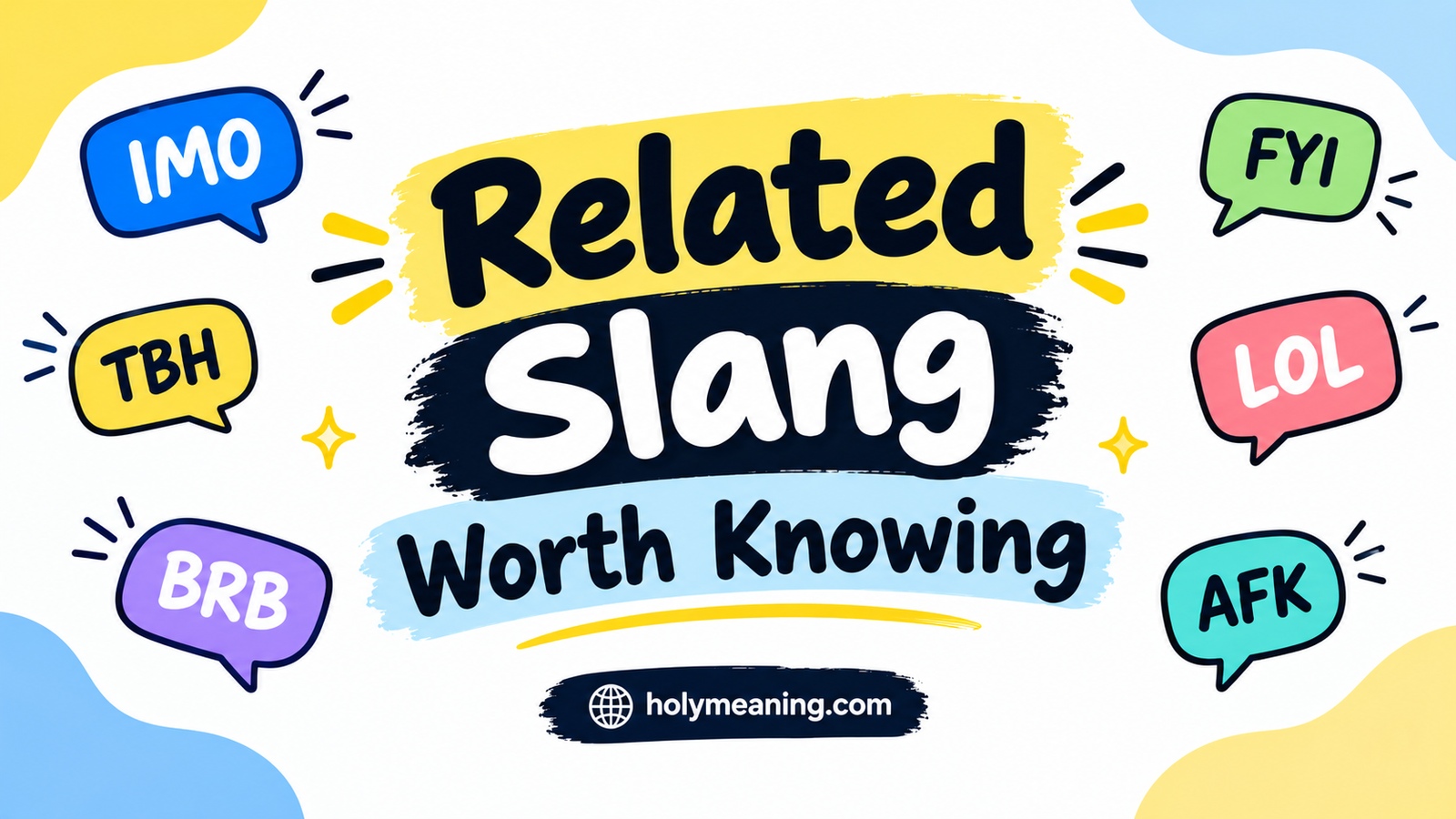
“Ion” doesn’t exist in isolation. It’s part of a broader family of texting abbreviations built on the same principle: compress spoken contractions down to their essential sound. Here’s a quick rundown of terms that follow similar logic:
- Idk — “I don’t know,” the more universally recognized cousin of “ion know”
- Finna — short for “fixing to,” meaning you’re about to do something
- Bet — a flexible way to signal agreement, roughly meaning “okay” or “deal”
- Fr — short for “for real,” used to emphasize sincerity or agreement
- Tbh — “to be honest,” prefacing an honest or blunt opinion
All of these share a common thread with “ion”: they’re rooted in spoken contractions and speech patterns, particularly patterns associated with African American English, that got adapted into written chat slang as texting became the dominant mode of everyday communication.
FAQs
Is “ion” a real dictionary word?
No — as slang, it’s not in standard dictionaries, though sites like Dictionary.com now list it as a recognized slang entry alongside the chemistry term.
What’s the most common meaning of “ion” in 2026?
“I don’t” remains by far the dominant usage across TikTok, Twitter/X, and texting — the “In Other News” meaning is much rarer today.
Does “ion” mean the same thing on every platform?
Yes, the meaning stays consistent across Snapchat, Instagram, and text messages — only the frequency of use shifts by platform.
Is it okay to use “ion” in a work email?
No — it’s still considered too casual for professional emails or any formal communication, even in laid-back workplace cultures.
Is “ion” fading out of use or still growing?
Still going strong — it remains firmly embedded in digital communication among younger users, with no signs of dropping off in 2026.
conclusion
Understanding ion meaning in text helps you avoid confusion in everyday chats. It’s simple once you know it. Most times, it just means “I don’t.” Sometimes, it signals a topic change. Context always gives you the answer.
Now you know the full ion meaning in text, use it wisely. Text it to friends. Skip it at work. Keep emails formal and clear. Small slang, big impact on how you sound. Stay casual where it fits, stay professional where it counts.