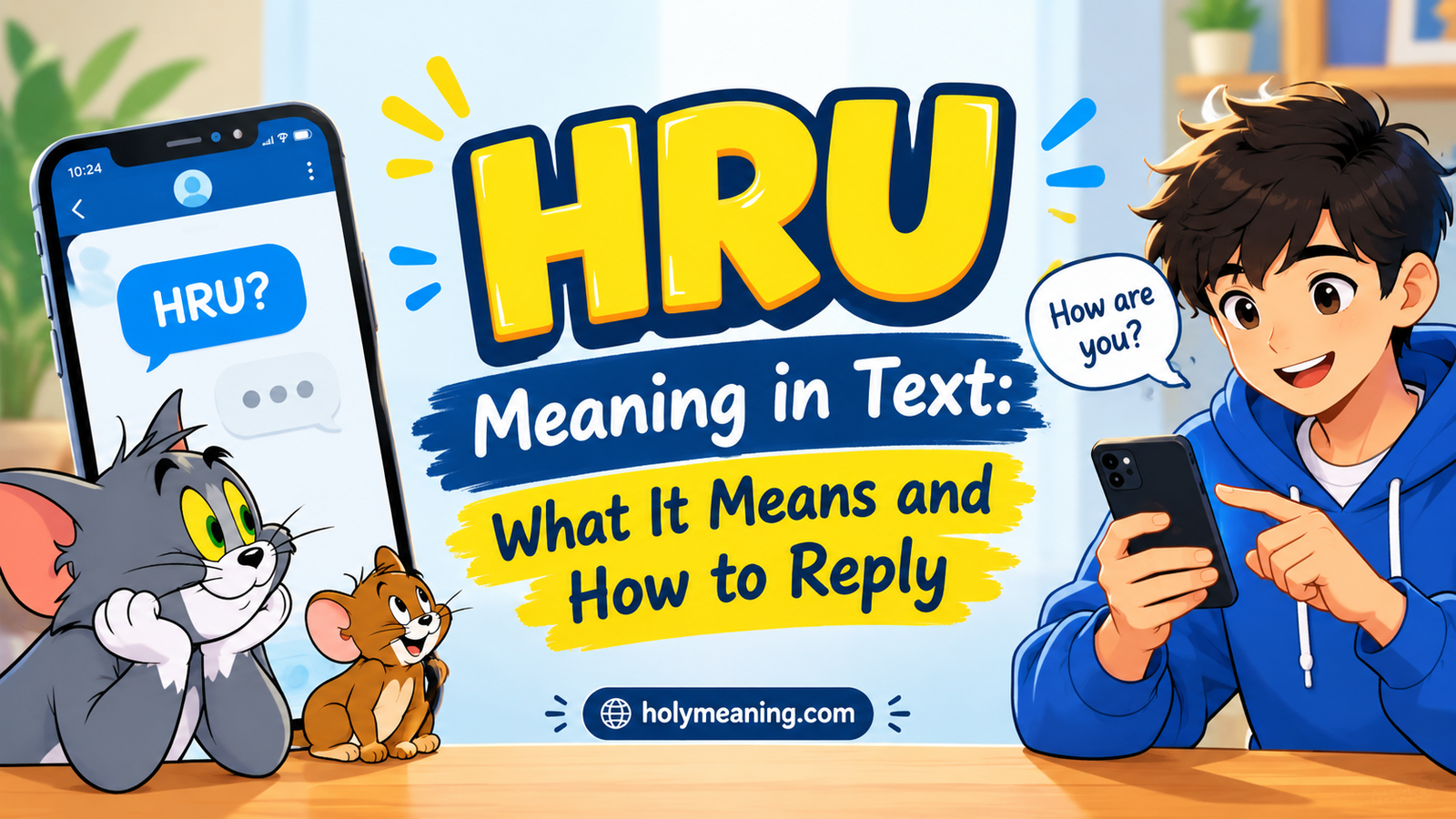
HRU meaning in text is simple: it stands for “how are you.” People type it as a quick greeting or a friendly check-in. It’s one of the most common pieces of text slang online.
Three little letters can carry more weight than you’d think. One lazy “hru” might open a friendship, rescue a stalled chat, or catch someone on a rough day.
The tone shifts with context. Punctuation, emojis, and timing all change how the message lands. A coworker’s “hru” on Slack differs from a crush’s midnight “hru 😏.” This guide covers replies, look-alike abbreviations, and the mistakes people make.
What Does HRU Mean in Text?
HRU is a texting abbreviation for “how are you?” People use it as a greeting or a quick check-in.
That’s the whole HRU definition. Nothing hidden sits underneath it.
“Hey! Haven’t talked in a while. hru?”
People spell it out letter by letter when they say it aloud: H-R-U. Most never say it at all. It lives almost entirely in HRU text messages, chats, and comment threads.
If you’ve ever wondered what does HRU mean from a stranger or a friend, the answer stays the same. It asks about your general state and nothing more.
HRU Meaning in Text Message vs. Social Posts
The meaning of HRU doesn’t shift between a HRU text message and a social post. Only the setting changes. In a private chat it feels personal. In a public comment it often works as a friendly nudge.
Where HRU Came From
Texting shorthand grew out of practical limits. Standard SMS messages cap at 160 characters, a rule that shaped early mobile messaging. The first SMS was sent in December 1992. Early phone keypads also made typing slow. You had to tap a key several times just to land one letter.
So people shortened everything. “Are” became “r” and “you” became “u.” Put “how” in front and you get “hru.” You can read more about this style on the SMS language page.
The limits are mostly gone now. Yet the habit stuck because it feels quick and relaxed. That’s the real reason this chat abbreviation survived.
What Tone Does HRU Carry?
Here’s the short answer to what tone does HRU carry: casual and warm. It works as a low-pressure greeting. It sits somewhere between a wave and a real question.
The sender usually isn’t asking for a life update. They’re opening a door. You can walk through it or just nod.
This is why the casual tone matters. A full “How are you doing today?” feels more deliberate. The short form feels easygoing. That’s the conversational tone most people want in a friendly message.
How Punctuation and Capitalization Change the Feel
Capitalization doesn’t change the HRU meaning. It shifts the energy.
| Version | Typical feel | Likely situation |
|---|---|---|
| hru | Relaxed, easy | Friends chatting |
| hru? | Slightly more direct | Starting a conversation |
| HRU? | Louder, more emphatic | Excited or urgent check-in |
| hru!! | Enthusiastic | Reuniting with someone |
| hru tho | Casual, a bit curious | Following up on something |
Think of it like tone of voice on paper. Lowercase whispers. Caps raises the volume.
Is HRU Flirty?
Not by itself. The abbreviation is neutral. Flirting comes from timing, emojis, and the relationship between you two.
A “hru 😏” at midnight from a crush reads differently than “hru” from a coworker at noon. Judge the context and not the three letters.
How People Use HRU
The HRU abbreviation shows up in four main ways. Each one signals a slightly different goal.
Opening a Conversation
“Hey, hru?”
The sender wants to start talking. They don’t have a specific topic yet.
Checking In After Something Hard
“Heard about your week. hru?”
Here the sender means it. They’re offering space for you to share.
Reconnecting After a Gap
“Long time no talk. hru?”
This is a soft re-entry. It says “I thought of you” without any pressure.
Keeping Small Talk Moving
“Good here. hru?”
This one passes the ball back. It’s the most common use of all.
HRU Examples in Real Conversations
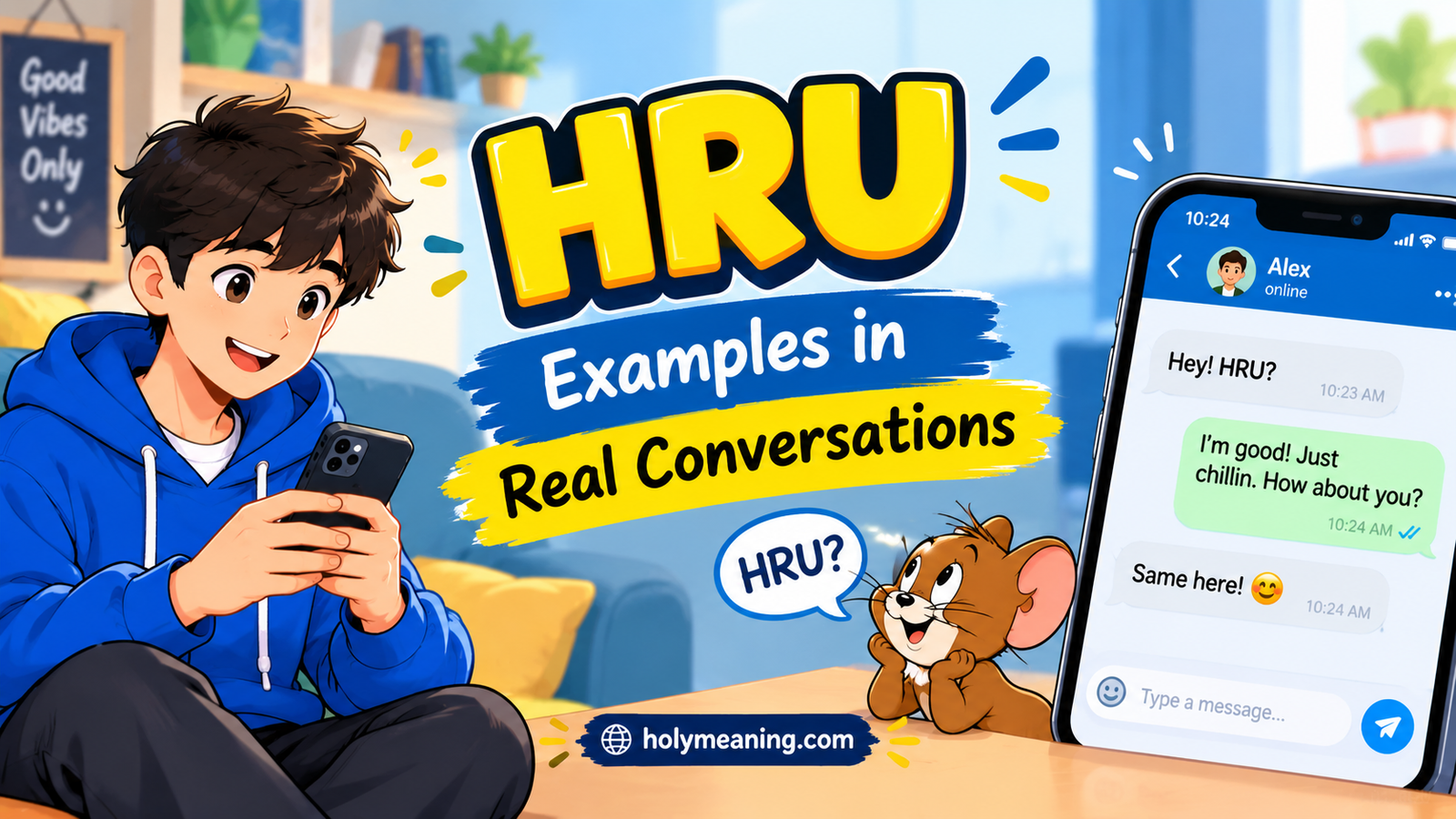
Seeing HRU examples in action helps most. These sample messages are sorted by relationship, since that’s what shapes the reply.
Friend
Maya: hey hru?
Sam: pretty good! just tired lol. hbu?
Coworker on Slack or Teams
Dev: Morning! hru?
Priya: Doing well, thanks. Did you see the client notes?
Family member
Mom: Hi sweetie, hru?
Jake: Good Mom. Busy week but okay. Call you Sunday?
New match on a dating app
Alex: hey hru today?
Jordan: not bad! just finished a hike. hru?
Someone you’re worried about
Lena: Been thinking about you. hru, really?
Chris: Honestly rough. Can we talk tonight?
These texting examples show a pattern. The more serious the situation, the more the sender adds around the abbreviation. A bare “hru” is light. A “hru, really?” is not.
Case Study: When a Short Reply Ended the Chat
Picture a common scenario. Nina texts her old roommate “hru?” after a year of silence. The roommate answers “good.” Nina has nothing to build on. The thread dies in a minute.
Now rewind. The roommate replies “good! just moved to Denver. hru?” That gives Nina three hooks: the move, the city, and a returned question. The chat runs for an hour.
The lesson is simple. A HRU response with one detail keeps things alive.
How to Reply to HRU
Knowing how to reply to HRU takes about ten seconds to learn. Follow one rule: answer honestly, then send the question back.
Answer, Then Return the Question
Most people add HBU (“how about you”) or WBU (“what about you”). It signals that you care about the other person’s answer too. That’s solid texting etiquette.
Reply Table
Use this table as a HRU reply cheat sheet.
| Situation | Sample reply | Tone |
|---|---|---|
| Good day | “Great, thanks! hbu?” | Friendly reply |
| Okay day | “Pretty good. Same old. hbu?” | Casual response |
| Rough day | “Been better, honestly. hbu?” | Honest reply |
| Busy | “Slammed but alive. hru?” | Light, humorous |
| Not in the mood | “Doing okay. Talk later?” | Polite and brief |
Honest Replies When You’re Not Okay
You don’t owe anyone a long story. Try one of these:
- “Not great today. Will explain later.”
- “Rough week. Glad you asked.”
- “Hanging in there. Can I call you?”
Each one is true. None demands an essay.
Replies That Stall the Chat
A bare “good” or “fine” kills most threads. Add one small detail to keep the conversation going.
- Weak: “fine”
- Stronger: “fine, just finished a long meeting. hbu?”
Small change. Big difference.
HRU vs How Are You vs How R U
The HRU vs how are you question comes down to formality and effort.
| Spelling | What it signals |
|---|---|
| hru | Quick, casual |
| how r u | Casual but slightly more typed out |
| how are you | Deliberate, polite |
| how’re you | Natural, spoken feel |
The full phrase feels intentional. The short version feels easy. Neither is wrong. Match the informal greeting to the relationship.
HRU HBU WBU HYD WYD: What’s the Difference?
People mix up these texting abbreviations constantly. Here’s the HRU HBU WBU HYD WYD breakdown.
| Abbreviation | Full phrase | What it asks | Sample use |
|---|---|---|---|
| HRU | How are you | Your general state | “hru today?” |
| HBU | How about you | Returns a question | “Good! hbu?” |
| WBU | What about you | Returns a question | “Busy week. wbu?” |
| HYD | How’s your day | Your day so far | “hyd going?” |
| WYD | What are you doing | Your current activity | “wyd tonight?” |
The key split is simple. HRU meaning is about how you feel. WYD meaning is about what you’re doing right now. HBU meaning and WBU meaning just bounce a question back. HYD meaning zooms in on today only.
Can You Use HRU at Work?
Short answer to can you use HRU at work: sometimes.
It’s fine with peers in a work chat like Slack or Teams. Most teams treat that space as relaxed. However, skip it in client emails, job applications, and anything that feels official. Workplace texting has a looser bar than formal writing.
For professional communication, swap in a polished option:
- “How have you been?”
- “I hope you’re well.”
- “I hope your week is going smoothly.”
A good test works well here. If you wouldn’t say “hey” in the message, don’t say “hru.”
HRU on Different Platforms
HRU on different platforms means roughly the same thing everywhere. Style shifts a little by app.
| Platform | How HRU shows up |
|---|---|
| Snapchat HRU | Fast, lowercase, often paired with emojis |
| Instagram DMs | Casual opener, sometimes after a story reply |
| WhatsApp texting | Common among friends and family |
| iMessage | Everyday personal chats |
| Discord messages | Casual, often among online friends |
| TikTok comments | Friendly nudge to a creator or friend |
Honestly, the meaning doesn’t change. Only the speed and the emoji habits do.
Does HRU Ever Mean Something Else?
In texting, almost never. It means “how are you.”
Rarely, you’ll spot it somewhere unusual. It might be a username, a company code, or an internal team acronym. In those cases, check three things: the app, the sender, and the words around it. If a coworker sends a spreadsheet labeled “HRU,” it’s not a greeting.
Common Misreads of HRU
Common misreads of HRU cause needless stress. Watch for these HRU mistakes.
- Flirting assumption: A simple greeting isn’t a romantic signal. Look at the context first.
- Expecting a long answer: Most senders want a line or two.
- Leaving it on read: A casual HRU misunderstanding like “it’s too small to answer” can come off cold.
Another quick one: overthinking. A casual greeting deserves a casual answer. You can’t really get it wrong.
FAQs
What does HRU stand for in text?
HRU stands for “how are you?” It’s a casual texting abbreviation that people use as a greeting or a quick check-in. The HRU meaning is the same on every app today.
How do you reply to HRU?
Give one honest line about your day, then send the question back with “hbu?” or “wbu?” A small detail like “good, just finished a long shift” keeps the HRU reply from stalling the chat.
Is HRU flirty?
Not on its own. It’s a neutral low-pressure greeting. Emojis, timing, and your history with the sender decide whether it carries a romantic vibe.
Can you use HRU at work?
Yes, with peers in a relaxed work chat like Slack or Teams. Skip it in client emails, applications, and other formal writing. Try “How have you been?” instead.
What’s the difference between HRU, HBU, and WYD?
HRU asks how you’re feeling. HBU bounces the question back after you answer. WYD asks what you’re doing right now.
Conclusion
Now you know the hru meaning in text. It’s a quick, friendly way to say “how are you.” The tone is casual and light. Nobody expects a long answer. Just reply with one honest line. Then send the question back.
Keep the hru meaning in text in mind when you chat at work or with friends. Use it with peers and close contacts. Skip it in formal emails. Don’t read too much into it. It’s usually just a warm hello. Next time you see “hru,” answer with confidence.










1 thought on “HRU Meaning in Text: What It Means and How to Reply”