MYF meaning in text refers to a casual texting acronym that most commonly stands for “Miss Your Face.” People use it to tell someone they miss seeing them, whether in person, on a video call, or in an old photo.
Three letters, one warm feeling, zero effort. That’s the quiet charm behind MYF, a tiny acronym that says more than a full sentence ever could, without the awkward, over-explained sentiment attached.
Beyond its sweet, affectionate core, MYF carries a few lesser-known meanings depending on context, tone, and platform. This guide breaks down every version, real examples, common mix-ups, and exactly when to use it right.
What Does MYF Mean in Text?
At its core, MYF meaning boils down to “Miss Your Face.” It’s the go-to interpretation in the vast majority of texts, DMs, and captions where you’ll see it pop up.
Here’s the simplest way to think about it: instead of typing out “I miss seeing you,” someone shortens the sentiment into three letters. It’s efficient. It’s a little playful. And it gets straight to the point without losing the warmth behind it.
Quick answer: If someone texts you “MYF,” they’re almost certainly saying they miss seeing your face, whether that’s in person, on a video call, or even in old photos you shared together.
Here’s a simple example to anchor the MYF definition before we go any further:
Text 1: “Found this pic from last summer 😭” Text 2: “MYF so much right now”
See how naturally it fits? No explanation needed once you know what does MYF mean. That’s part of why this particular piece of texting slang caught on in the first place.
It’s worth noting that MYF isn’t brand new. Phrases like “miss your face” have floated around in casual speech and texting for years. The MYF acronym picked up steam as more people looked for quick ways to express affection without typing out a full sentence every time. That’s basically the entire history of internet acronyms in one sentence: people are busy, feelings are real, and shortcuts win.
A Quick Snapshot
| Term | Full Meaning | Common Tone |
|---|---|---|
| MYF | Miss Your Face | Warm, casual, affectionate |
| IMY | I Miss You | Direct, heartfelt |
| BRB | Be Right Back | Neutral, functional |
That table alone should clear up most of the initial confusion. But the emotional side of MYF deserves its own explanation, because that’s really what makes it different from just saying “I miss you.”
The Emotional Weight Behind “Miss Your Face”
Here’s a question worth asking: why “face” specifically? Why not just “I miss you,” full stop?
The answer has more to do with psychology than grammar. When someone says they miss your face, they’re pointing to something specific and visual. It’s not an abstract feeling; it’s your expressions, your smile, the way you laugh at your own jokes before anyone else does. That specificity makes the phrase feel more personal than a generic “miss you.”
Think about the difference between these two texts:
- “I miss you.”
- “I miss your face.”
The first one is sincere, sure, but it’s also a little formal, almost businesslike in its brevity. The second one paints a picture. It’s harder to say “miss your face” without smiling a little while you type it, and that same energy carries through when someone reads it.
This is exactly why MYF in texting tends to show up in specific emotional moments:
- Right after a video call ends and the screen goes dark
- When someone stumbles across an old photo or video
- After a long stretch of not seeing someone face-to-face
- During a random burst of nostalgia in the middle of a regular conversation
None of this is some deep linguistic mystery. It’s a small, sweet phrase that happens to hit a little differently than the standard alternative. That’s really all there is to it, and there’s no need to overanalyze something that’s meant to feel light and genuine.
Other Meanings of MYF (Context Changes Everything)
Now, here’s where things get slightly more complicated. Three-letter acronyms rarely have just one meaning floating around the internet, and MYF is no exception.
While “Miss Your Face” dominates in casual, affectionate texting, you might occasionally run into these other MYF interpretations:
- “My Fault” — used when someone’s owning up to a mistake. It usually shows up right before or after an explanation, like: “MYF, I sent that to the wrong group chat.”
- “Mind Your Own”-style variants — a blunter, more confrontational use that shows up in comment sections or heated group chats. This version leans sharp, not sweet.
- “Make Your Future” — an occasional appearance in motivational captions or inspirational posts, though this one is far less common than the other meanings.
Here’s the honest truth: not every alternate meaning gets equal airtime. “Miss Your Face” is the dominant, default reading in almost every casual or affectionate context. The other meanings pop up occasionally, and mostly in very specific settings where the surrounding message makes the intent obvious.
How to Tell the Difference
A simple rule of thumb works well here: read the sentence around the acronym, not just the acronym itself.
| If the message sounds like… | It probably means… |
|---|---|
| An apology or explanation | “My Fault” |
| A warm, nostalgic, or affectionate note | “Miss Your Face” |
| A sharp or defensive comment | The blunter variant |
| A caption on an inspirational post | “Make Your Future” (rare) |
This is the same logic that applies to plenty of other short pieces of chat slang. The letters alone rarely tell the whole story. Tone, punctuation, and the message right before it do most of the heavy lifting.
How and When to Use MYF in Texting
Knowing the MYF definition is one thing. Knowing when to actually use MYF? That’s the part that saves you from an awkward moment.
Situations Where MYF Lands Well
MYF fits naturally into a handful of everyday texting situations:
- Reconnecting after time apart — whether it’s been a week or a year, MYF works well as a warm opener or closer.
- Responding to an old photo or throwback post — it’s basically built for this exact scenario.
- Wrapping up a video call — a nice, light way to end things on a warm note.
- Casual, ongoing check-ins with close friends, partners, or family members.
In each of these cases, MYF adds a little emotional texture without requiring a long, sentimental paragraph. It says a lot in very little space, which is really the entire appeal of good texting slang.
When to Skip It
That said, MYF isn’t a universal fit. A few situations where it’s better left out:
- Professional or work-related messages. Slang like this has no place in a client email or a message to your boss.
- Early conversations with someone new. Dropping MYF too soon can come across as overly familiar, especially if the relationship hasn’t built up that comfort level yet.
- Serious or heavy conversations. If the tone of the conversation is emotionally weighty for other reasons, a casual acronym can feel out of place or even dismissive.
- Messages to people who might not recognize it. If there’s a real chance the other person has no idea what it means, either explain it once or just skip it entirely.
Texting etiquette really comes down to reading the room, even when “the room” is just a phone screen. If you’re ever unsure, a good general rule applies: match the tone of the acronym to the tone of the relationship.
MYF vs. IMY vs. IMS: What’s the Real Difference?
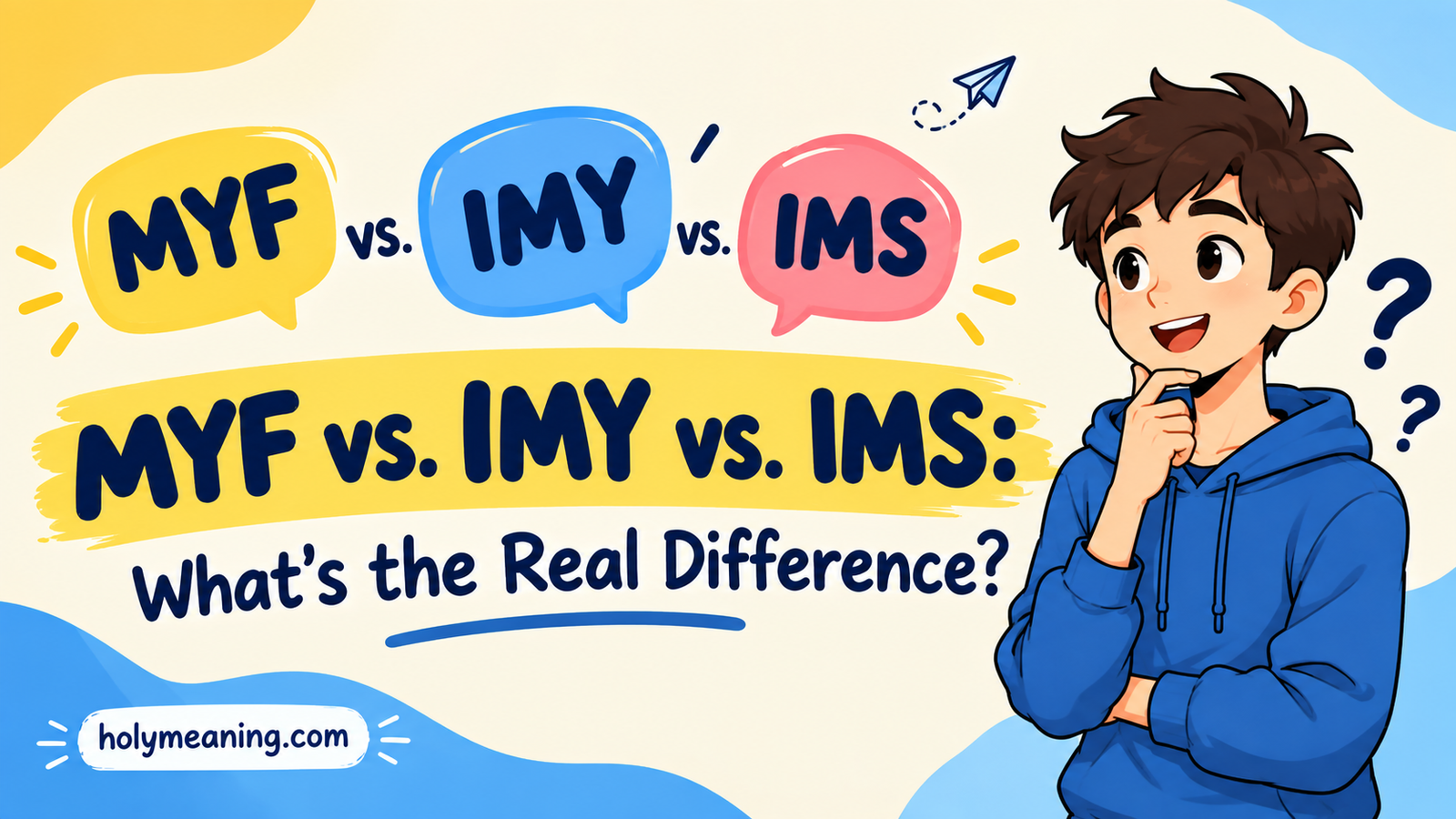
This comparison trips people up constantly, so let’s clear it up properly. MYF vs IMY and MYF vs IMS both come up often enough that they deserve a real, side-by-side breakdown instead of a vague “they’re all kind of similar” answer.
| Acronym | Full Meaning | Tone | Best Used For |
|---|---|---|---|
| MYF | Miss Your Face | Warm, visual, slightly playful | Nostalgic or affectionate check-ins |
| IMY | I Miss You | Direct, sincere, universally understood | Any relationship, any context |
| IMS | Varies (commonly “I Miss/Missed Something” or context-specific shorthand) | Ambiguous | Rarely used for affection; usually needs context |
Here’s the honest breakdown of each:
IMY meaning is the most straightforward of the three. It’s short for “I Miss You,” and it works in nearly every type of relationship, from close friends to romantic partners to family members. There’s no ambiguity, no guessing games. It’s the acronym equivalent of a firm handshake: reliable, clear, and appropriate almost anywhere.
MYF carries a slightly different flavor. It’s more visual, a bit more playful, and often feels more personal because it points to something specific (someone’s face) rather than a general feeling. It leans a little more affectionate than IMY in many cases, though the two overlap plenty.
IMS meaning is genuinely the trickiest of the group, and it’s worth being upfront about that instead of pretending otherwise. Its meaning shifts depending on the platform and the conversation, and it doesn’t have one single, dominant definition the way MYF and IMY do. If you see “MYF and IMS” used interchangeably somewhere online, take that with a grain of salt. The safest move is to read the surrounding context carefully, since guessing wrong here is far more likely than with the other two.
Bottom line: if you want maximum clarity, use IMY. If you want something a little warmer and more personal, MYF fits better. And if someone sends you IMS, don’t assume, just ask. This kind of slang comparison matters more than people realize, especially in relationship slang where tone carries a lot of the actual meaning.
Real-Life Examples of MYF in Conversation
Nothing clears up an acronym faster than seeing it in actual use. Here are a handful of realistic conversation examples, each showing a different tone and relationship dynamic.
Friends After a Trip
Person A: “Can’t believe the trip is already over 😭” Person B: “Right?? MYF already and it’s been like 2 hours”
This is one of the most common real texting situations: a quick, affectionate line right after spending real, extended time with someone.
Replying to a Selfie
Person A: [sends a selfie] Person B: “MYF omg send more”
Short, casual, and instantly understood between two people who already have that easy rapport.
Long-Distance Couple
Person A: “Video call didn’t last long enough tonight” Person B: “I know, MYF so much right now. Counting down the days”
Here, MYF carries more emotional weight because of the relationship context. The same three letters, but a heavier, more romantic tone.
Group Chat After a Reunion
Group message: “Seeing everyone this weekend was everything 🥹 MYF ALL”
In group settings, MYF often gets used collectively rather than one-on-one, spreading the same warm sentiment across multiple people at once.
The Sarcastic MYF
Person A: [sends an exaggerated, over-the-top facial expression] Person B: “MYF 🙄”
Tone completely flips the meaning here. Paired with an eye-roll emoji, MYF becomes a joke rather than a genuine sentiment. This is a great reminder that punctuation, emojis, and surrounding context can shift the meaning of a text abbreviation without changing a single letter.
How to Reply to MYF
Getting an MYF text is easy enough to understand, but figuring out how to respond can feel oddly tricky, especially if you’re not used to using MYF yourself.
A few solid, low-pressure options:
- Mirror it back: “MYF too” keeps things simple and matches the tone exactly.
- Add a specific memory or plan: “MYF, we need to hang out again soon” turns the acronym into an actual next step.
- Keep it visual: A heart emoji, a laughing emoji, or even just sending a photo back works well, especially in casual friendships.
- Match the energy, not just the words: If the original message felt playful, keep your reply playful. If it felt sincere, a short, genuine reply works better than an overly casual one.
One small but important note: don’t overthink your reply. Part of what makes MYF work in the first place is its casual, low-effort nature. A long, drawn-out response can actually feel mismatched against a short, breezy text like this one.
Why Acronyms Like MYF Catch On
It’s worth taking a step back and asking a bigger question: why do phrases like this stick around at all, becoming a lasting part of everyday digital communication?
A few real, practical reasons:
- Speed. Typing “MYF” takes a fraction of the time it takes to type “I miss seeing your face.” In fast-moving conversations, that matters more than people realize.
- Personality. Shortened phrases often feel more personal than their fully spelled-out counterparts, similar to how a nickname feels warmer than someone’s full name.
- Low emotional pressure. For newer friendships or more casual relationships, a quick acronym like MYF carries affection without the weight that a fully spelled-out sentence sometimes brings.
None of this requires some grand theory about online communication trends. People like fast, expressive shortcuts, and MYF happens to be a good one.
A Mini Case Study: How MYF Actually Spreads Through a Friend Group
It helps to see how a term like this moves from “one person’s habit” to “something everyone in the group chat says.” Here’s a realistic pattern of how that tends to play out:
- One person starts it. Usually someone who texts a lot and likes shorthand. They start signing off calls or replying to photos with MYF instead of a full sentence.
- A close friend picks it up. After seeing it a handful of times, they start using it back, almost without thinking about it.
- It spreads into the group chat. Once two or three people are using it, it stops feeling like “someone’s thing” and starts feeling like a shared, normal part of how the group talks.
- New members learn it through context, not explanation. Anyone who joins the group later usually figures out the MYF text meaning just by watching how it’s used, without ever needing a formal definition.
This pattern isn’t unique to MYF. It’s basically how every piece of internet slang spreads, from acronyms to inside jokes to entire phrases. The acronym doesn’t need to be announced or explained; it just needs a few repeated, clear examples in context, and the rest takes care of itself.
Related Terms Worth Knowing
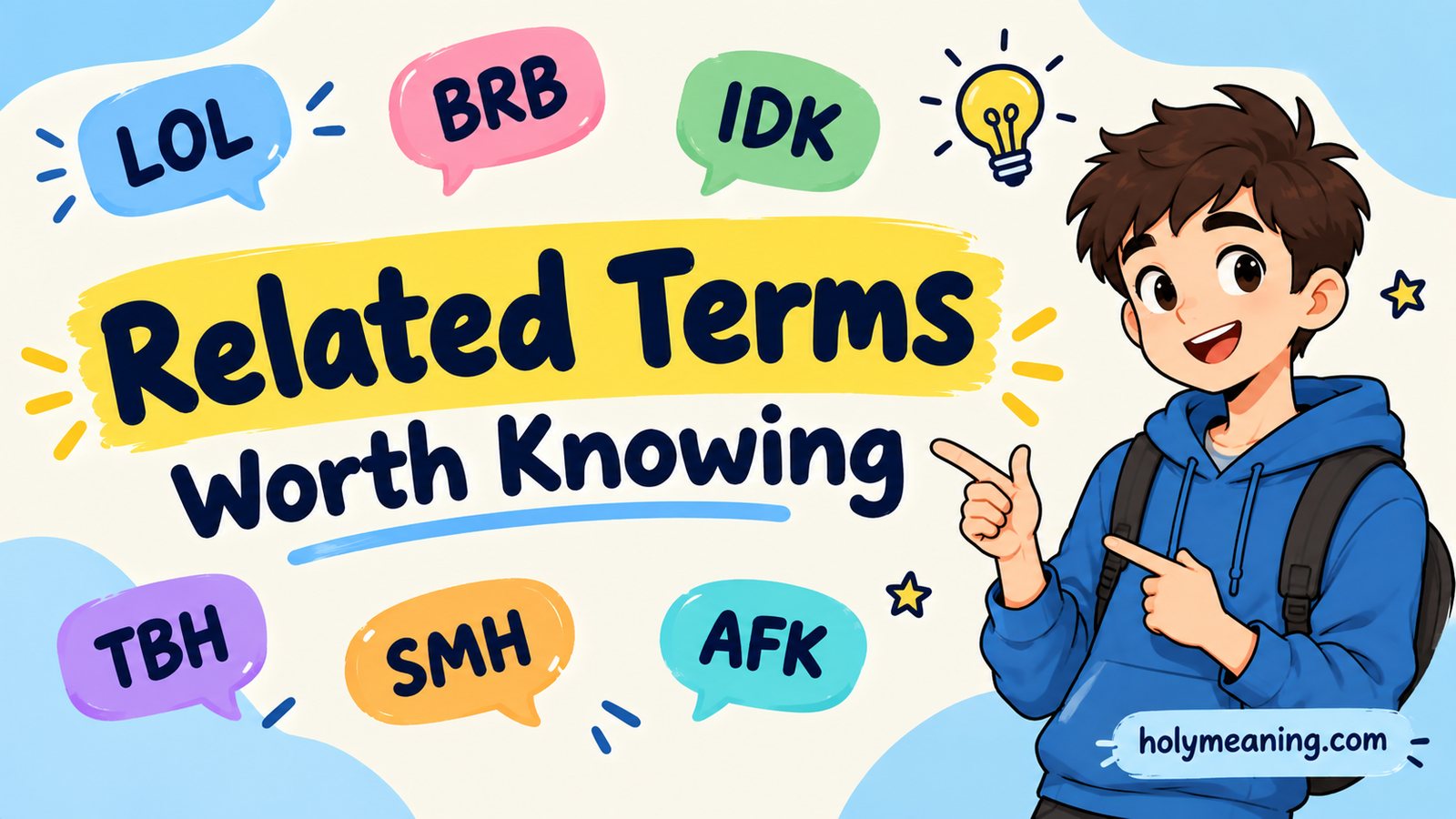
Since MYF doesn’t exist in isolation, it helps to know a few of its neighbors in the world of relationship slang and casual SMS abbreviations:
| Term | Meaning |
|---|---|
| ILY | I Love You |
| LYSM | Love You So Much |
| TYSM | Thank You So Much |
| OML | Oh My Lord/Goodness |
| WYD | What You Doing |
| HMU | Hit Me Up |
Knowing this wider vocabulary of related terms makes it much easier to read tone and intent across different conversations, rather than treating each chat acronym as an isolated puzzle every time it shows up.
Common Misreadings and Misconceptions About MYF
Let’s clear up a handful of MYF misconceptions and MYF misunderstandings that tend to circulate around this particular piece of texting slang.
Misconception 1: MYF Is Always Romantic
Not even close. MYF shows up just as often between friends, siblings, and family members as it does between romantic partners. The phrase itself is flexible enough to fit almost any close relationship, which is a big part of why it spread so widely in the first place.
Misconception 2: MYF Might Mean “Mind Your Face”
This alternate reading does exist in some corners of the internet, usually in a joking, teasing context rather than a genuine one. It’s far less common than “Miss Your Face,” so unless the surrounding conversation is clearly playful or teasing in nature, this isn’t the meaning you should default to. This is a classic case of acronym confusion creeping in from less common, niche usages.
Misconception 3: It’s the Same as “Meet You Friday”
This one’s an easy mix-up, but context sorts it out almost instantly. “Meet You Friday” shows up in planning-related conversations (“MYF at 7?”), while “Miss Your Face” shows up in emotional, reflective ones. If the message includes a time, date, or plan, you’re almost certainly looking at the scheduling version, not the affectionate one.
Misconception 4: It Only Works in Text
MYF shows up just as often outside of standard text messages. You’ll spot it in Instagram comments, TikTok captions, Snapchat replies, and even the occasional tweet. It’s a piece of broader social media terms, not something limited strictly to SMS threads.
Misconception 5: Older Audiences Won’t Understand It
This assumption doesn’t hold up as well as people think. Plenty of people across different age groups pick up common slang quickly, especially once they’ve seen it in context a time or two. Rather than assuming someone won’t get it based on age, a better rule applies universally: when in doubt, spell it out. It costs nothing to clarify, and it avoids any unnecessary slang mistakes or confusion down the line.
Texting Etiquette: Using MYF the Right Way
A few final, practical notes on appropriate texting and using MYF (and honestly, most chat abbreviations) with good judgment:
- Match the acronym to the relationship. Save it for people you’re actually close with, not brand-new contacts or professional conversations.
- Let emojis do some of the tone work. A heart, a laughing face, or an eye-roll can completely shift how MYF reads, so pick your accompanying emoji carefully.
- When clarity matters more than cleverness, spell it out. If there’s a real chance of confusion, especially with someone unfamiliar with internet slang, it’s always safer to write the full phrase.
- Don’t force it. Slang works best when it feels natural. If MYF doesn’t fit your usual texting style, there’s no rule saying you have to use it.
Good slang etiquette and chat etiquette both come down to the same basic principle: read the room, respect the relationship, and don’t sacrifice clarity for the sake of sounding trendy. As one longtime moderator of a large texting-slang forum once put it during a community discussion, good slang tends to explain itself once people see it used correctly a few times, rather than needing a dictionary entry. That’s really the whole philosophy behind acronyms like MYF: they’re built to be picked up quickly through context, not memorized from a glossary.
FAQs
What does MYF mean in a text?
MYF most commonly means “Miss Your Face,” a casual way of saying you miss seeing someone.
Is MYF only used romantically?
No, it’s used just as often between friends and family as it is between romantic partners.
What’s the difference between MYF and IMY?
IMY means “I Miss You” and is more direct, while MYF is more visual and personal, referencing someone’s face specifically.
Can MYF mean something other than “Miss Your Face”?
Occasionally, it can mean “My Fault” or, rarely, “Make Your Future,” depending on the surrounding message.
Is MYF still commonly used in 2026?
Yes, it remains a popular acronym across texting, Instagram comments, and Snapchat replies, especially among close friends and couples.
conclusion
MYF meaning in text really comes down to one simple idea: missing someone’s face. It’s warm, quick, and easy to use. Once you know the context, it’s never confusing again.
Understanding MYF meaning in text helps you text with more confidence. Use it with close friends. Save it for warm, personal moments. Skip it in formal chats. Small acronyms like this carry real feeling. Now you know exactly what it means and when it fits.






1 thought on “MYF Meaning in Text: What It Really Means and How to Use It”